Cross-Border Joint Ventures: What Malaysian Companies Should Consider Before Expanding Regionally
Malaysian companies are increasingly looking beyond domestic markets to expand their operations, secure new projects, and collaborate with established foreign partners. This is precisely where a cross-border joint venture (JV) comes in.
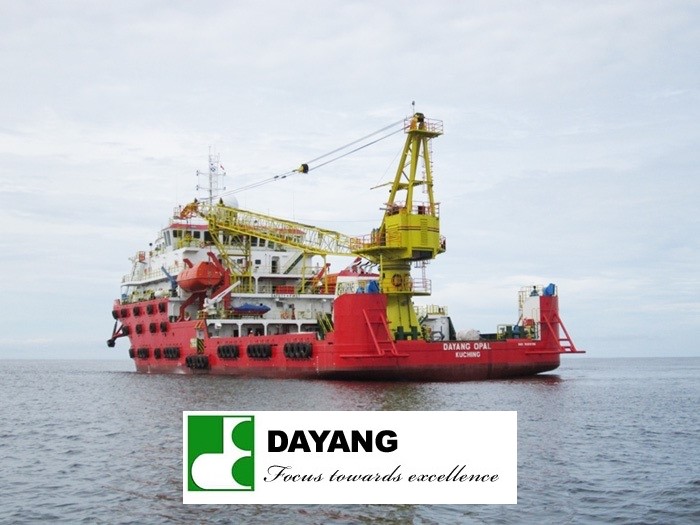
Look no further than the recent proposed JV between Malaysian-listed Dayang Enterprise Holdings Bhd and Brunei-based Petrokon Utama Sdn Bhd. The multinational duo’s collaboration is aiming to drill into success in the regional oil and gas sector by incorporating a new JV company in Brunei.
However, as lucrative as the commercial opportunities it unlocks may be, a cross-border JV also poses significant risks and raises critical legal and governance questions. For Malaysian companies, a regional venture is not merely a business arrangement; it is a complex corporate structure that must be carefully negotiated, documented, and managed from the outset.
The Pull of Regional Partnerships
What makes a JV the vehicle of choice for companies expanding across borders? This arrangement allows a company to strategically combine its technical capability, capital, industry experience, or client relationships with a foreign partner’s local market access, regulatory familiarity, manpower, or operational network.
This structure is particularly common in regulated or project-based industries such as oil and gas, construction, infrastructure, technology, logistics, and energy. In many cases, the local partner plays a key role in navigating licensing requirements, procurement rules, government-linked opportunities, local content policies, and operational execution.
However, the success of a JV depends heavily on the quality of its legal documentation.
The Shareholders’ Agreement is the Commercial Constitution of an incorporated JV
In an incorporated JV, the shareholders’ agreement is one of the most important documents. It governs the relationship between the parties and should address not only shareholding percentages, but also management control, board composition, reserved matters, funding obligations, profit distribution, restrictions on share transfers, confidentiality, deadlock resolution, default, termination, and exit mechanisms.
Where the parties hold equal equity, such as a 50:50 structure, the agreement must be especially clear on decision-making. Equal ownership may appear commercially fair, but it can create deadlock if both parties disagree on major matters. A well-drafted shareholders’ agreement should therefore include practical deadlock mechanisms, such as escalation to senior management, mediation, buy-sell provisions, or agreed termination rights.
Without these mechanisms, a commercially promising JV may become paralysed when disputes arise.
Conditions Precedent Must Be Carefully Drafted
Many JV agreements only become effective once certain conditions precedent are fulfilled. These may include incorporation of the JV company, regulatory approvals, project award, board approvals, financing confirmation, foreign investment approvals, or execution of ancillary contracts.
From a legal drafting perspective, conditions precedent should not be vague. The agreement should specify who is responsible for satisfying each condition, the deadline for fulfilment, what evidence is required, whether the deadline can be extended, and what happens if the conditions are not fulfilled.
This is important because parties may incur time and cost before the JV becomes fully operational. A clear contractual framework reduces uncertainty and avoids disputes over whether the agreement has become binding or whether a party is entitled to walk away.
Governing Laws
A Malaysian company entering into a foreign JV must consider legal issues in at least two jurisdictions.
From the Malaysian side, the company must assess its corporate authority, board approvals, directors’ duties, disclosure obligations, tax implications, foreign exchange considerations, and, where applicable, Bursa Malaysia requirements. If the Malaysian company is listed, the board must also assess whether the transaction is material and whether announcements, shareholder approvals, or related-party transaction rules are triggered.
From the foreign jurisdiction side, the company must consider incorporation requirements, local licensing, foreign equity restrictions, employment laws, tax treatment, local dispute resolution options, anti-bribery compliance, and enforceability of contractual rights.
A common mistake is to assume that a Malaysian-style shareholders’ agreement can simply be used in another country. In practice, the agreement must be reviewed against the laws of the jurisdiction where the JV company is incorporated.
Board Control and Reserved Matters Are Critical
In any JV, control does not only come from shareholding. It also comes from board appointment rights, quorum requirements, voting thresholds, veto rights, signing authority, bank mandate control, and reserved matters.
Reserved matters are decisions that cannot be made without the consent of specified shareholders or directors. These commonly include approval of annual budgets, major contracts, borrowings, capital expenditure, changes to business scope, issuance of new shares, appointment of key management, related-party transactions, litigation, asset disposals, and winding up.
For Malaysian companies entering into cross-border ventures, reserved matters are essential to protect against unilateral decisions by the foreign partner, especially where the JV company will hold project rights, licences, receivables, intellectual property, or key customer relationships.
Compliance and Anti-Corruption Clauses Should Not Be Treated as Boilerplate
Cross-border ventures, particularly in sectors involving government contracts, procurement, licensing, or state-owned entities, require strong compliance protections.
The JV agreement should include anti-bribery and anti-corruption undertakings, sanctions compliance, conflict of interest disclosures, audit rights, record-keeping obligations, and termination rights for compliance breaches.
For Malaysian companies, this is especially important in light of corporate liability principles under Malaysian anti-corruption law. A company may face serious legal and reputational consequences if improper conduct occurs through employees, agents, representatives, or associated persons.
Contractual Guardrails for Future Divestments
A strong JV agreement should provide clear exit rights where there is prolonged deadlock, breach of contract, insolvency, change of control, loss of project, failure to obtain approvals, regulatory illegality, or reputational harm.
Exit provisions should also address valuation, payment timing, transfer mechanics, non-compete obligations, treatment of ongoing contracts, intellectual property ownership, confidentiality, and post-termination liabilities.
A JV may begin as a partnership, but the agreement must also provide a clean and enforceable route out.
Securing the Venture’s Future
The Dayang-Petrokon collaboration reflects a broader commercial trend: Malaysian companies are increasingly using JVs to expand regionally and access new project opportunities.
However, a JV should not be treated as a simple memorandum of understanding or handshake arrangement. It is a corporate structure that requires careful legal planning from the outset.
For Malaysian businesses, the key legal lesson is clear: before entering into a cross-border JV, ensure that the shareholders’ agreement, governance structure, reserved matters, conditions precedent, compliance obligations, and exit rights are properly drafted and aligned with both Malaysian law and the law of the foreign jurisdiction.
A well-structured JV does not merely record the parties’ commercial intention. It protects the business when circumstances change.
For more insights into the Malaysian legal system such as this, do make sure to follow us on Facebook and Instagram or visit our official website. You can also read our articles on the popular Malaysian news aggregator app Newswav here.