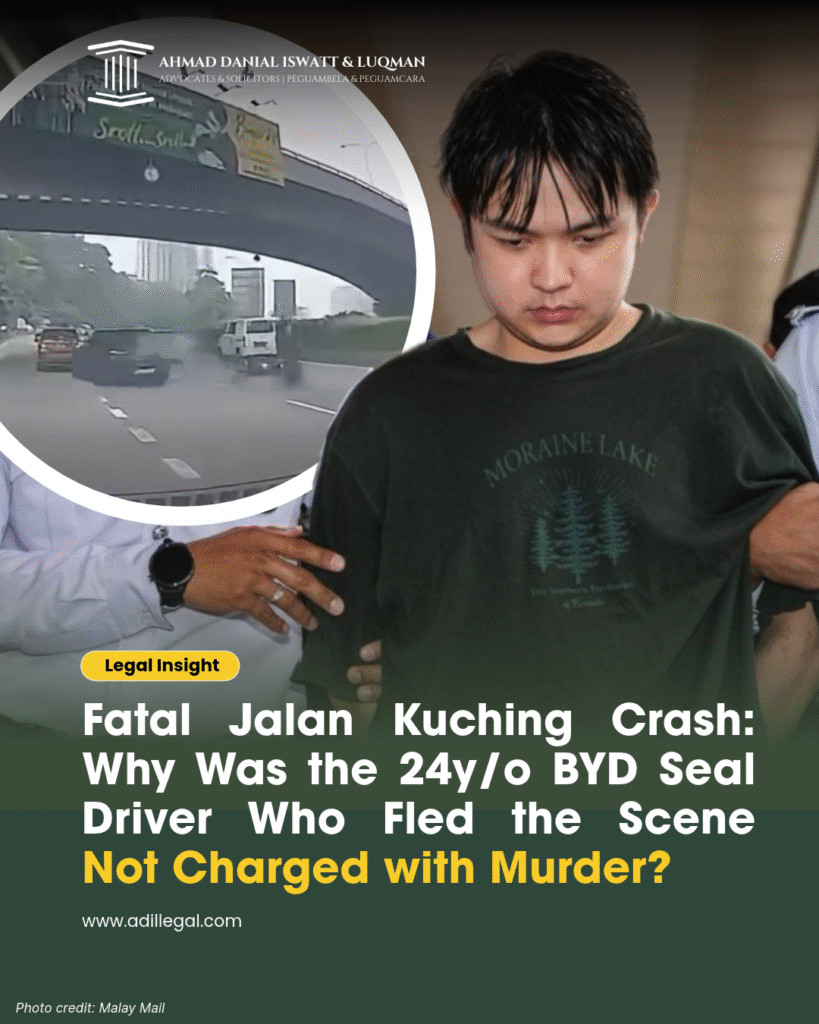
Fatal Jalan Kuching Crash: Why Was the 24y/o BYD Seal Driver Who Fled the Scene Not Charged with Murder?
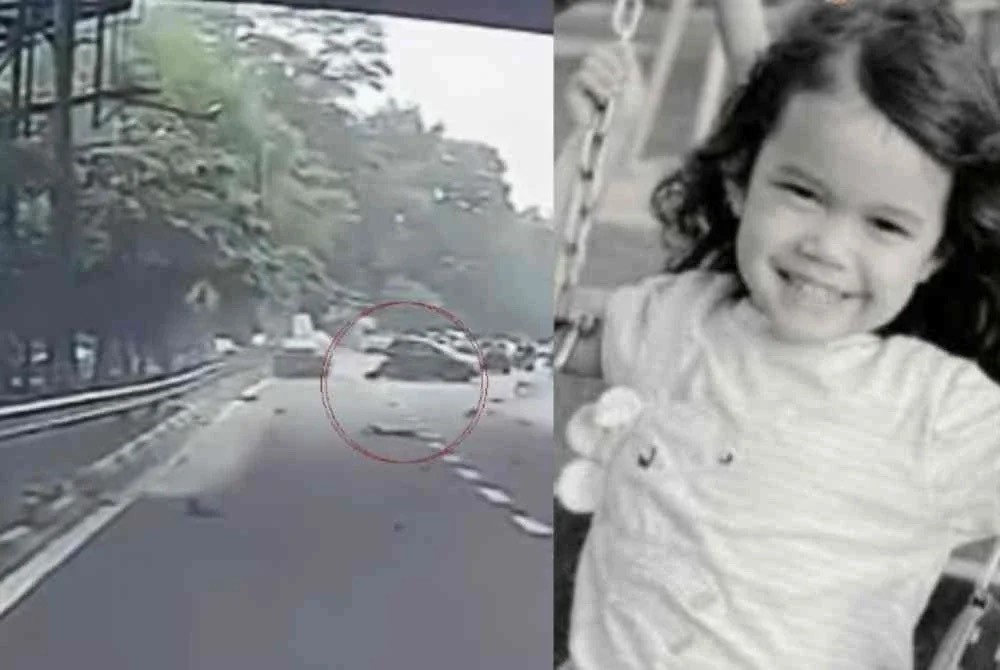
A fatal crash along Jalan Kuching in Kuala Lumpur involving five cars and a motorcycle sparked outrage among Malaysians recently, with footage of the incident going viral on social media. The crash took place at 3:44 PM on 10 October when a BYD Seal allegedly rammed into the rear of a Perodua Bezza, causing the latter to spin out of control across the road, striking a Yamaha 135LC motorcycle before ploughing into a Nissan Almera, a Toyota Alphard, and a Perodua Myvi.
A five-year-old girl, Asiah Ahmad Syahir, in the rear seat of the Bezza tragically lost her life in the crash, while her 30-year-old father, who was driving, sustained injuries to his right hand. Meanwhile, the 33-year-old rider of the motorcycle sustained serious head injuries.
The driver of the BYD Seal, 24-year-old bank assistant sales manager Raeven Goh, kept on driving after allegedly causing the crash and was subsequently arrested on 14 October upon his discharge from a private hospital. The suspect was treated at the hospital for a concussion sustained during the crash before being held overnight at the Dang Wangi district police headquarters lock-up.
Following this, many Malaysians took to social media to question why the accused was only charged under the RTA. Many were perplexed as to why Goh was not charged under provisions of the Penal Code, specifically Section 302 for murder or Section 304 for culpable homicide not amounting to murder.
To understand the prosecution’s decision, let’s examine the media reports and information available to the public on the case, as well as the relevant legal framework.
The three RTA charges against the accused
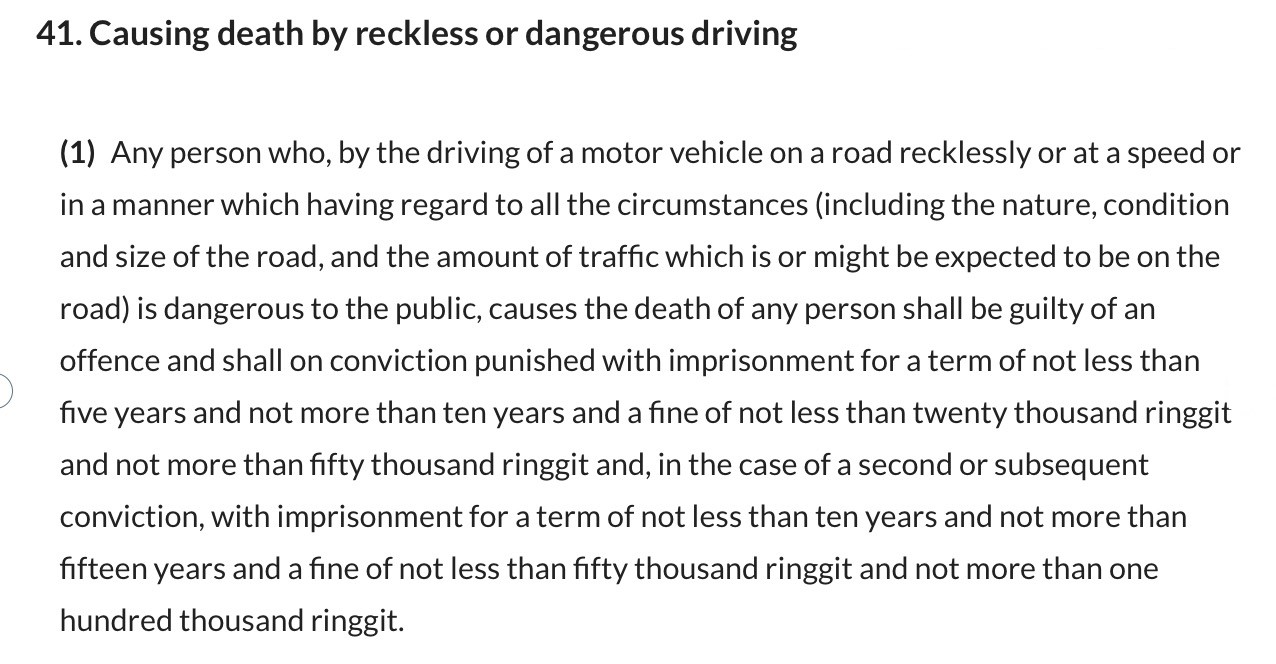
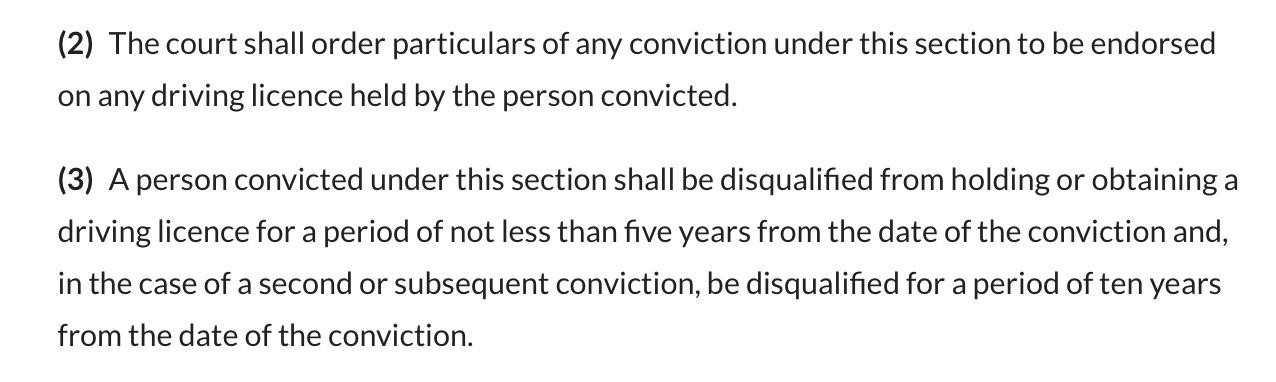
The primary charge against Goh at the Kuala Lumpur Magistrate’s Court was framed under Section 41(1) of the RTA for causing death by reckless or dangerous driving. Upon conviction, the offence carries a jail sentence of between five and 10 years, a fine ranging between RM20,000 and RM50,000, and a minimum five-year disqualification from holding a driving licence.
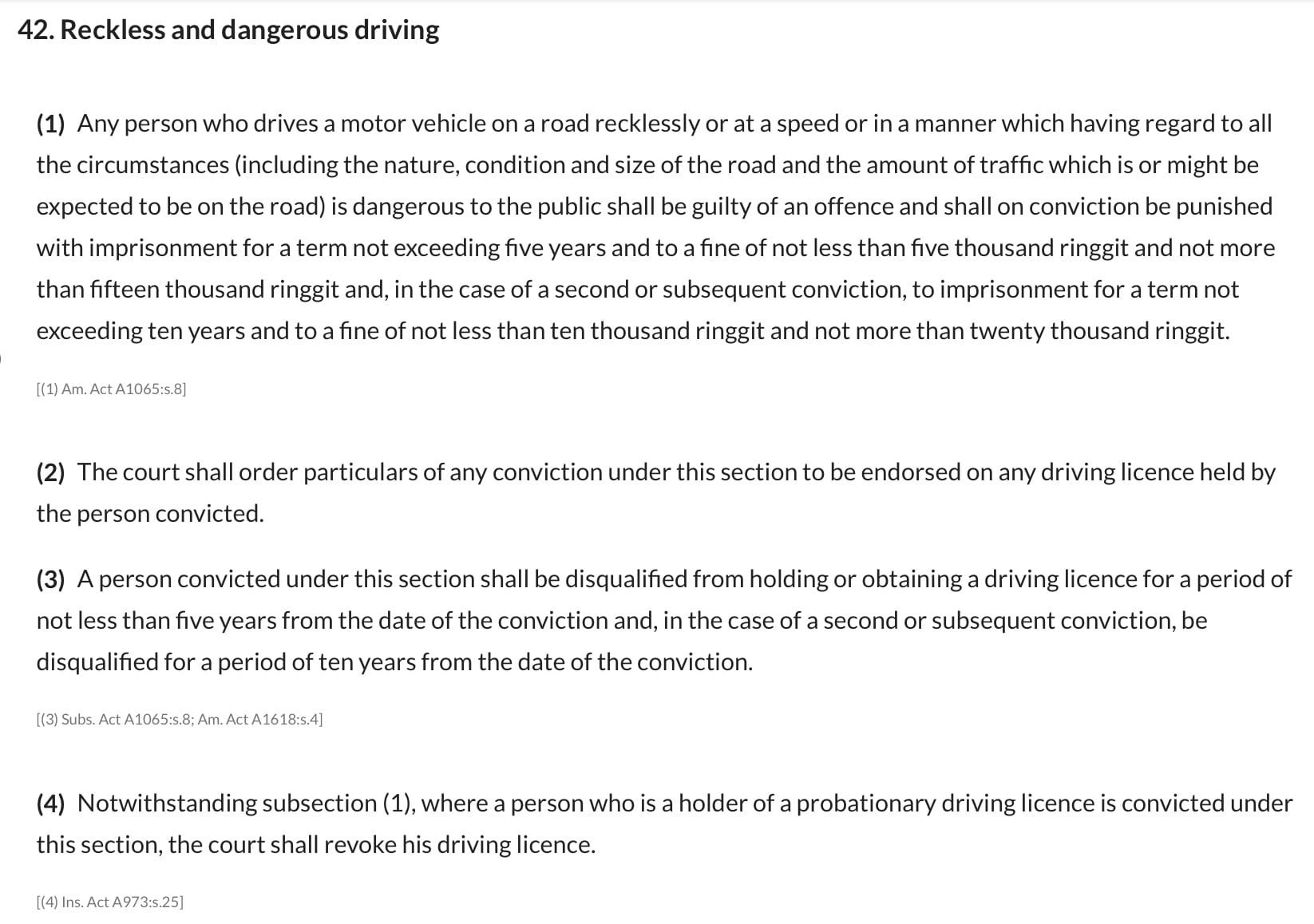
The second charge was for reckless and dangerous driving under Section 42(1) of the RTA. Upon conviction, this provision carries a jail sentence of up to five years, a fine of between RM5,000 and RM15,000, and licence disqualification for at least five years.
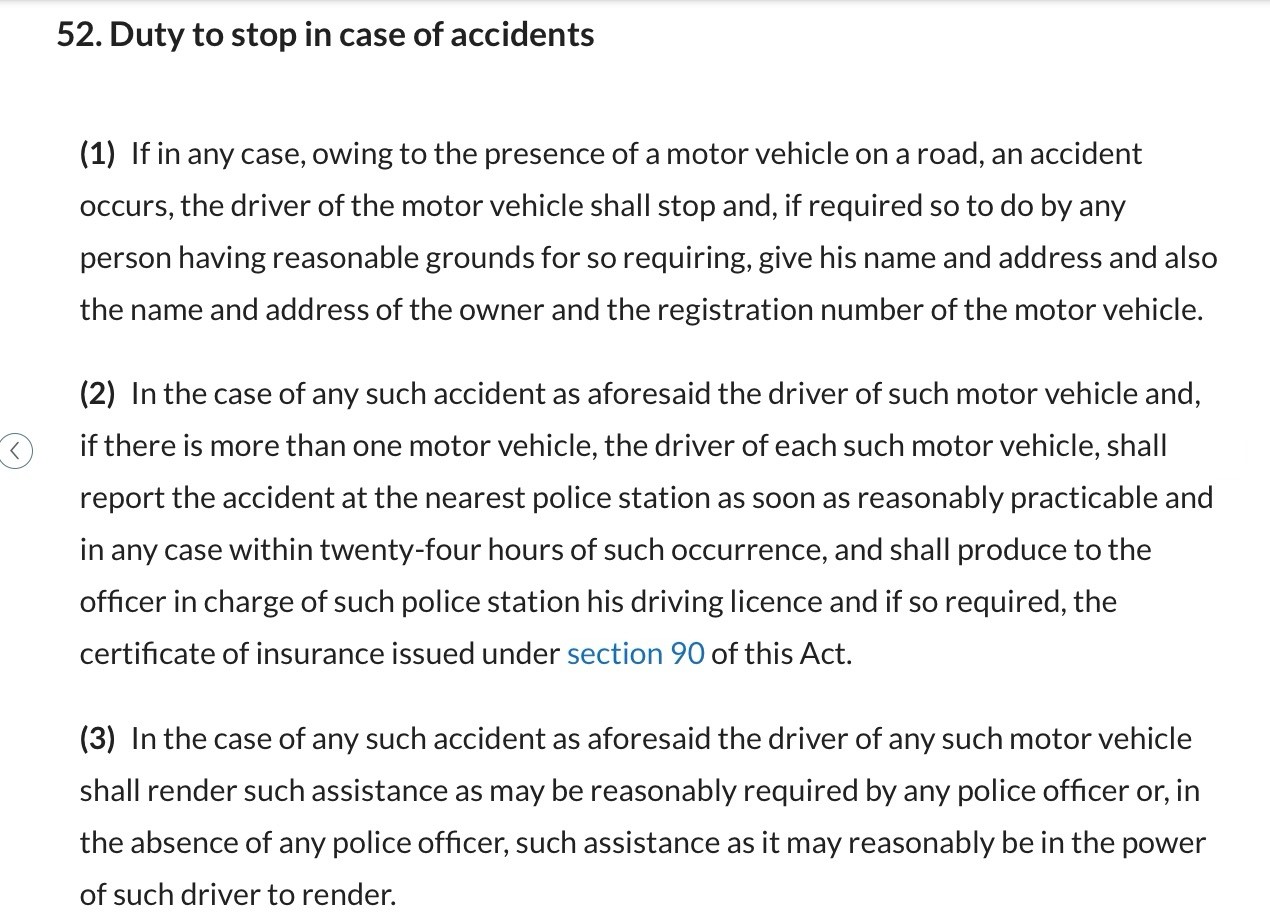
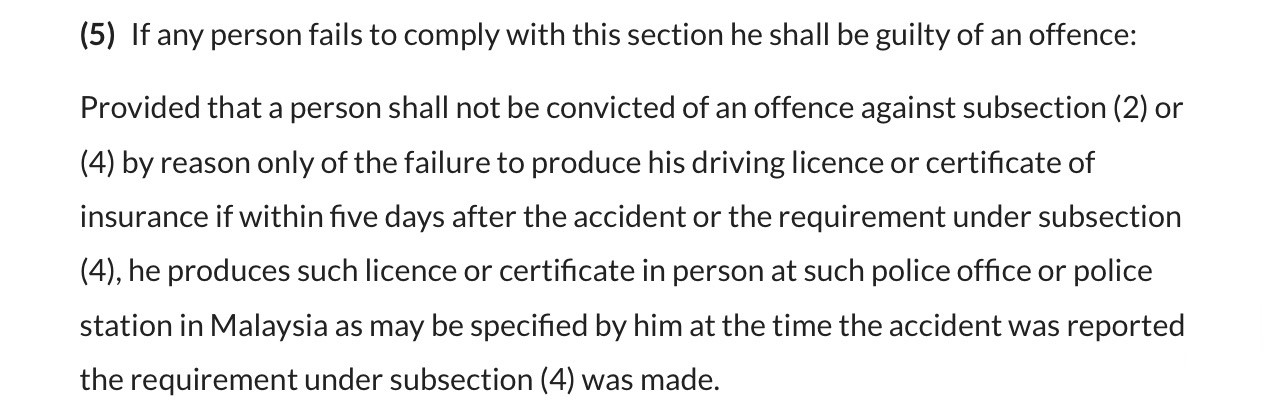
Meanwhile, the third charge was under Section 52(1) of the same Act for failing to stop his vehicle immediately after the road collision. Upon conviction, the offence carries a maximum fine of RM2,000 or up to six months’ imprisonment.
The accused claimed trial to all three charges, with Magistrate Aliaa Anwar granting bail at RM36,000 with one surety. As part of his bail conditions, Goh was also ordered to surrender his passport, while his driving licence was suspended until the conclusion of the trial.
Why wasn’t the accused charged with murder or other Penal Code provisions?
In criminal proceedings, the power of prosecution rests with the Attorney General. Furthermore, the Attorney General’s Chambers (AGC) is tasked with determining the most appropriate charges based on a thorough examination of the investigation papers, witness statements, physical evidence, and statutory provisions.
The prosecution has the discretion to select charges that align with the facts and circumstances of a case. Therefore, the heaviest charge is not necessarily the choice if the available evidence is insufficient to satisfy the essential elements of that specific offence.
With that in mind, a murder charge under Section 302 of the Penal Code or culpable homicide under Section 304 of the same Act requires proof of specific legal elements of intent or knowledge relevant to the provision used. The mere occurrence of a fatal crash does not automatically prove these statutory elements.
Consequently, a lack of sufficient evidence pointing towards intention or knowledge was likely a key consideration in the prosecution’s decision to opt for charges under the RTA instead.
Why do some road accident cases lead to murder charges while others do not?
It is crucial to recognise that every case presents distinct facts and evidence that must be assessed individually. While the manner in which a vehicle was driven and the prevailing road conditions are relevant factors, no single element automatically proves the offence of murder.
Additionally, fleeing the scene of an accident does not in itself establish murderous intent or satisfy the statutory criteria required under Section 302 or Section 304 of the Penal Code. However, the act of leaving the scene can be assessed under provisions relating to a driver’s duties after an accident, including Section 52 of the RTA, under which the accused was charged.
In this case, whether a driver complied with their statutory duties after a collision is a distinct legal question from whether the statutory elements of murder or culpable homicide can be proven in court.
Charges under the RTA are not necessarily more lenient than those under the Penal Code
Legal action brought under the RTA should not be viewed as inherently more lenient than charges under the Penal Code. For instance, Section 41(1) of the RTA, under which the accused was charged, carries a minimum jail term of five years up to a maximum of 10 years, alongside a fine ranging from RM20,000 to RM50,000 for a first conviction.
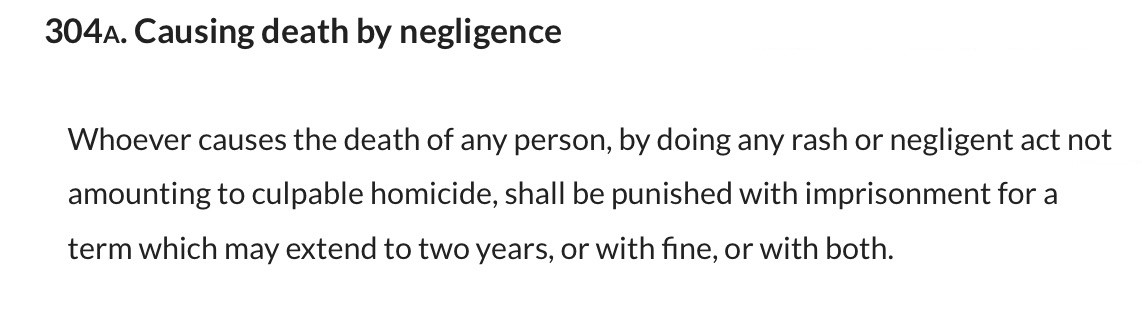
By contrast, a comparable charge under Section 304A of the Penal Code for causing death by a rash or negligent act not amounting to culpable homicide carries a maximum imprisonment term of two years, a fine, or both upon conviction. Thus, the charge under the RTA carries a significantly heavier penalty.
Selection of charges must not be based solely on penalties
The selection of charges must be based on the elements of the offence and available evidence, not purely on a comparison of penalties. Evidence must be sufficient to secure a conviction.
The main question is not merely whether the prosecution can bring the heaviest charge, but whether that charge can be proven in court. In criminal cases, to secure a conviction, the prosecution bears the burden of proving the case beyond reasonable doubt.
Charges of murder or culpable homicide under the Penal Code carry a risk of failing to be proven if the testimonies do not meet the required elements or knowledge. For example, in the case of Public Prosecutor v Mahfar bin Sairan, the accused was initially charged with murdering his wife in an incident involving a car he was driving.
However, the court found the evidence insufficient to satisfy the statutory elements of the offence of murder or culpable homicide. As a result, the accused was ultimately convicted under Section 304A of the Penal Code and sentenced to six months’ imprisonment.
Moving forward, all eyes will now be on the Kuala Lumpur Magistrate’s Court when the case comes up for case management on 19 November. In the meantime, it is important for members of the public to remain calm and let the rule of law take its course.
For more insights into the Malaysian legal system such as this, do make sure to follow us on Facebook and Instagram or visit our official website. You can also read our articles on the popular Malaysian news aggregator app Newswav here.