If an Accused in Malaysia is Warded & Can't Attend Court, Can the Judge Just Hold Proceedings at the Hospital?
Recently, there have been a couple of notable, high-profile criminal cases in which the accused had their court charges postponed due to hospitalisation. On 7 August 2026, former Prime Minister Datuk Seri Ismail Sabri Yaakob was admitted to the National Heart Institute (IJN), prompting the Bera Member of Parliament’s (MP) Sessions Court charge under Section 36(2) of the Malaysian Anti-Corruption Commission Act (failing to declare assets) to be postponed to 26 August.
A few days later, on 3 September, former Lembaga Tabung Haji chief operating officer (COO) Datuk Adi Azuan Abdul Ghani was also hospitalised just as a charge against him under Section 165 of the Penal Code (offence of a public servant obtaining a valuable item without consideration) was about to commence. The proceedings were postponed, with a case mention fixed for 24 September.
Such occurrences are not entirely new in our country, as there are many past instances of court dates being adjourned because an accused person is unable to attend. With that in mind, many have wondered: Is it possible for an individual to be charged, remanded, or even undergo trial outside of a physical courtroom if they are unable to attend?
Simply put, the answer is yes. Malaysian law does not strictly make the physical courtroom itself an absolute requirement for these legal processes to occur.
Here is everything you need to know.
Any place can be declared an “open and public court”
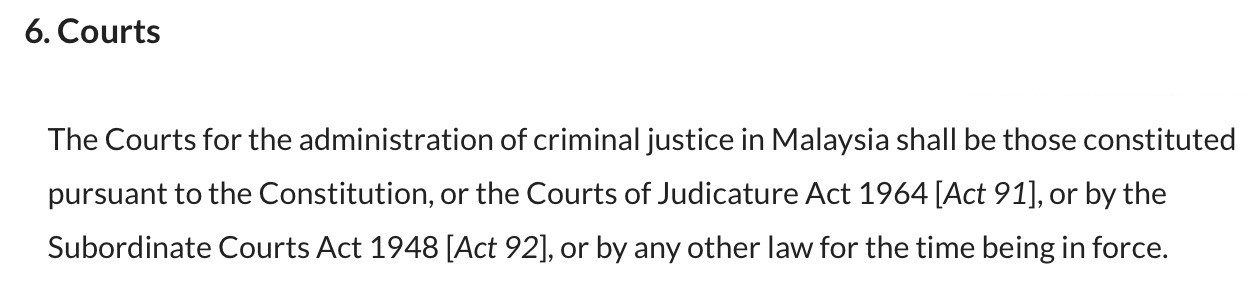
According to Section 6 of the Criminal Procedure Code (CPC), the courts for the administration of criminal justice in Malaysia shall be those constituted pursuant to the Constitution, or the Courts of Judicature Act 1964 (CJA), or the Subordinate Courts Act 1948 (SCA), or by any other law enforced in the country.
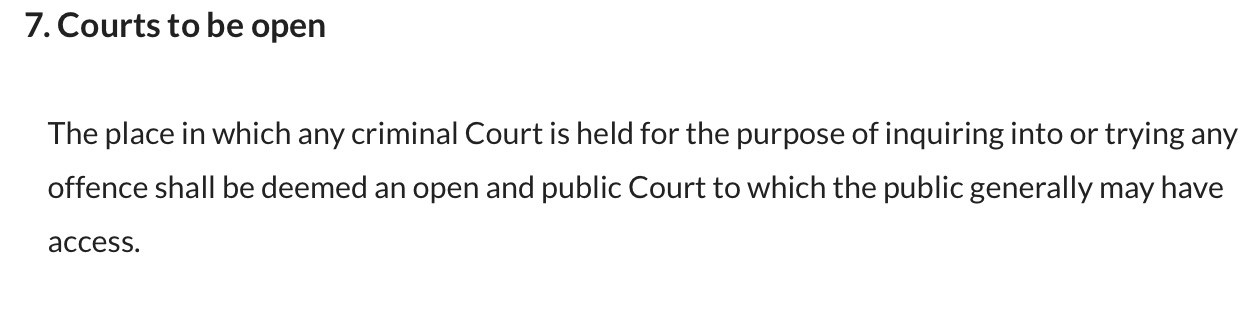
Furthermore, Section 7 of the CPC establishes that the “place” in which any criminal court is held for the purpose of inquiring into or trying any offence shall be deemed an “open and public court” to which the public generally may have access.
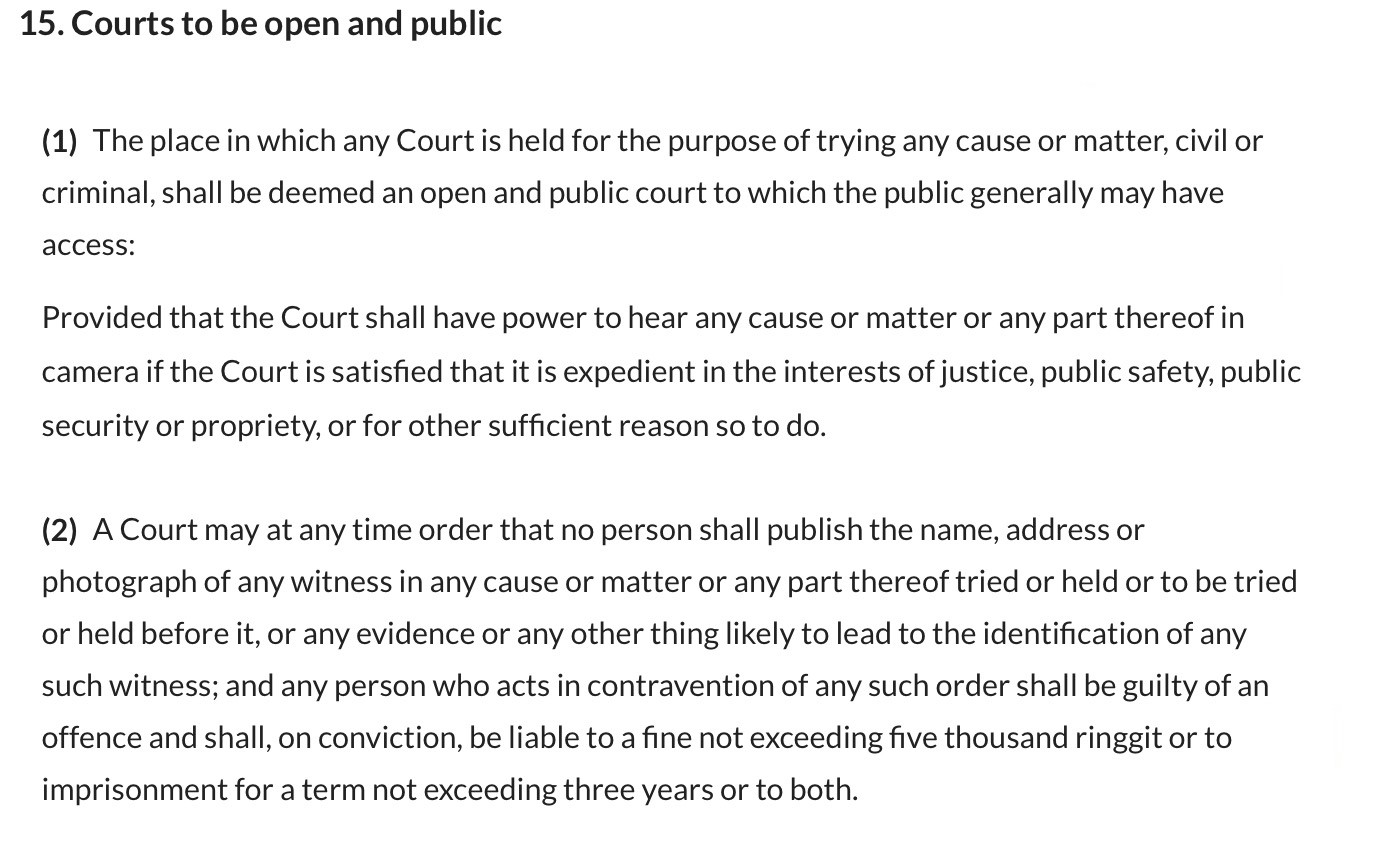
Similarly, Section 15(1) of the CJA prescribes that the place in which any court is held for the purpose of trying any cause or matter, civil or criminal, shall be deemed an open and public court to which the public generally may have access. This provision also establishes that the court shall have the power to hear any cause or matter or any part thereof “in camera” if the court is satisfied that it is expedient in the interests of justice, public safety, public security or propriety, or for other sufficient reason.
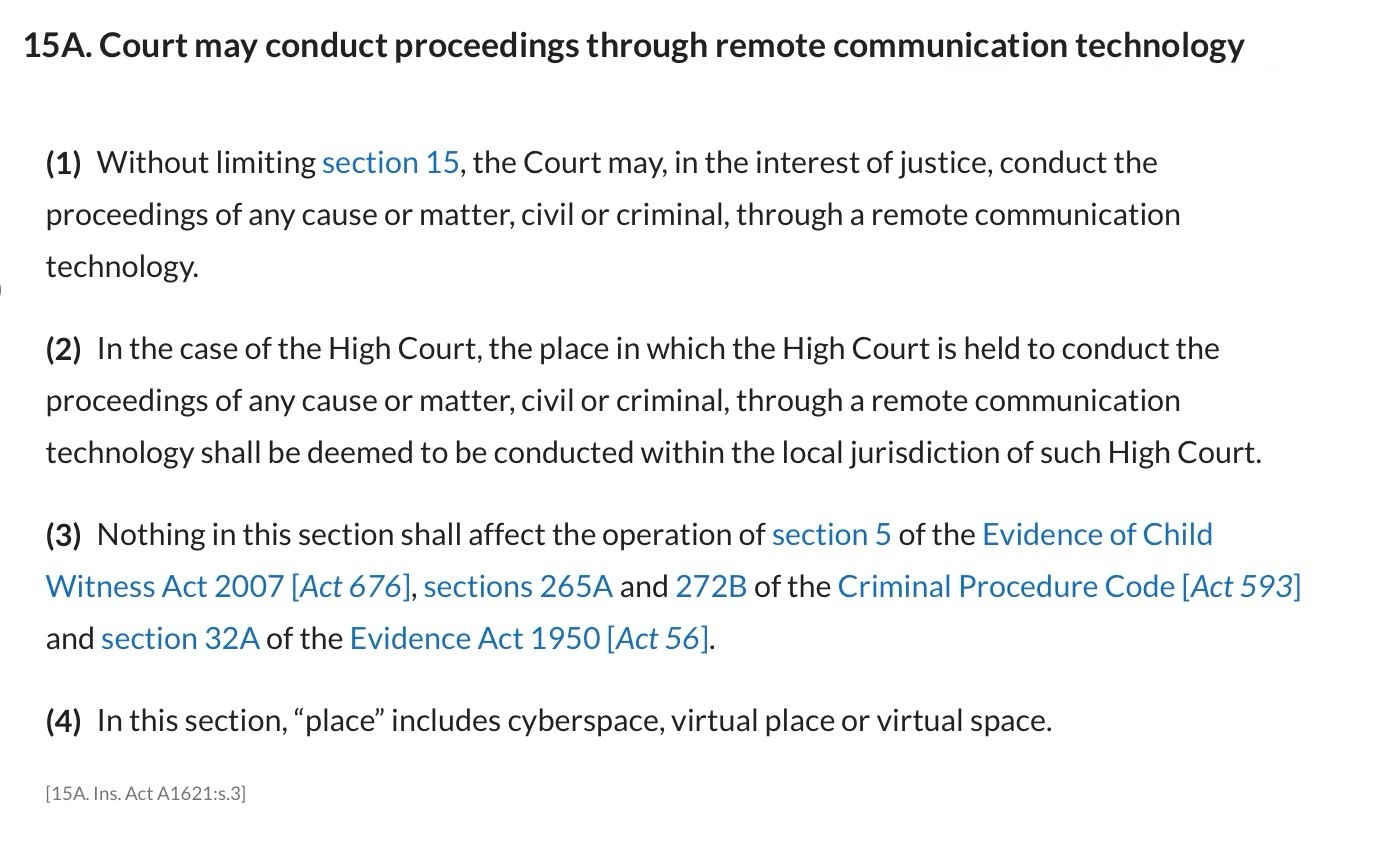
Additionally, Section 15A(1) of the CJA allows the court, in the interest of justice, to conduct the proceedings of any cause or matter, civil or criminal, through a remote communication technology, with Section 15A(4) explicitly defining “place” to include cyberspace, a virtual place, or virtual space.
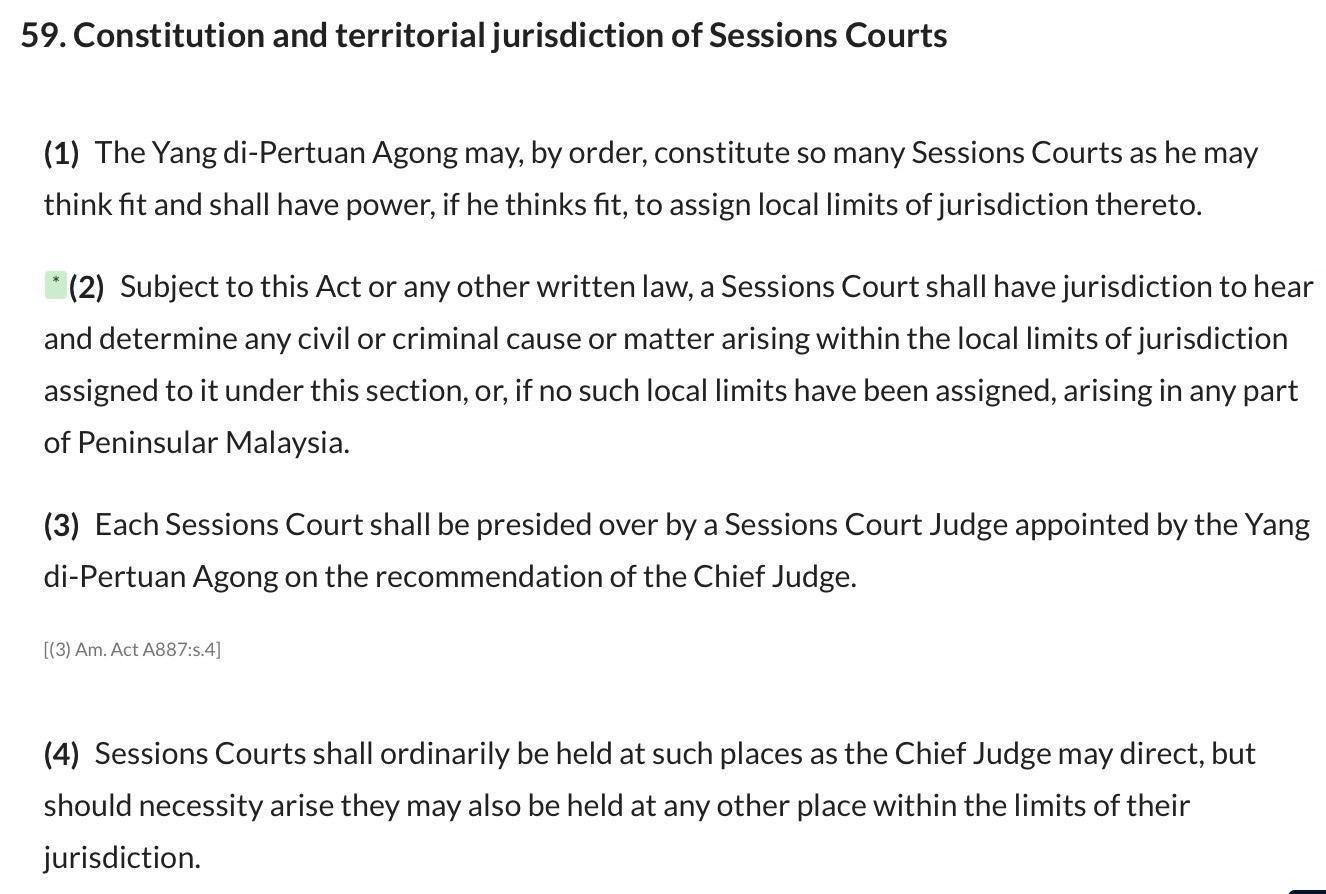
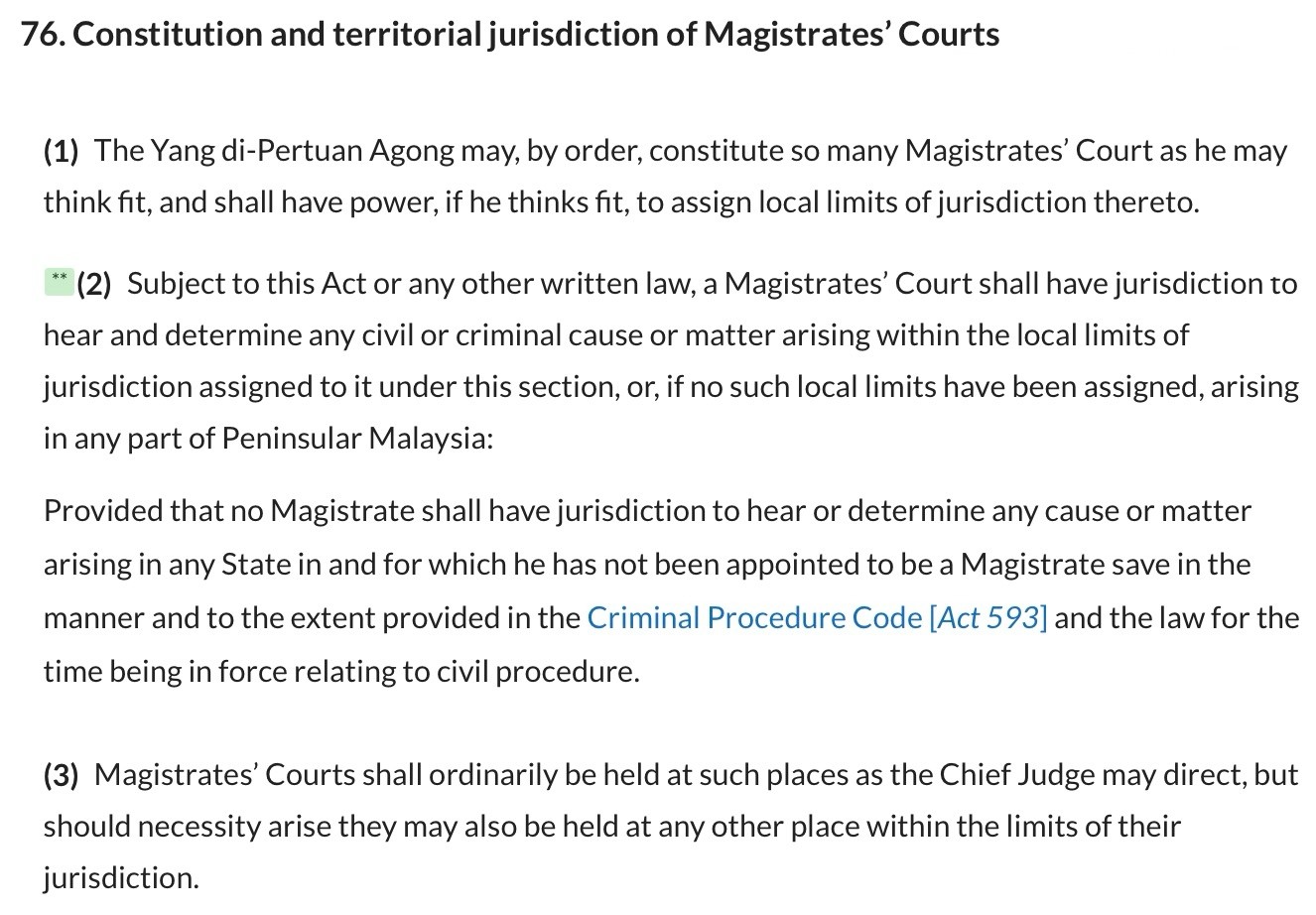
So, which “place” can be deemed an “open and public court”? Sections 59(4) and 76(3) of the SCA provide the answer.
Section 59(4) establishes that Sessions Courts shall ordinarily be held at such places as the Chief Judge may direct, but should necessity arise, they may also be held at any other place within the limits of their jurisdiction. Meanwhile, Section 76(3) establishes the exact same flexibility for Magistrates’ Courts. This means alternative locations like a hospital ward, a police lock-up, or other necessary sites can legally function as courts if the courts declare them as an “open and public court”.
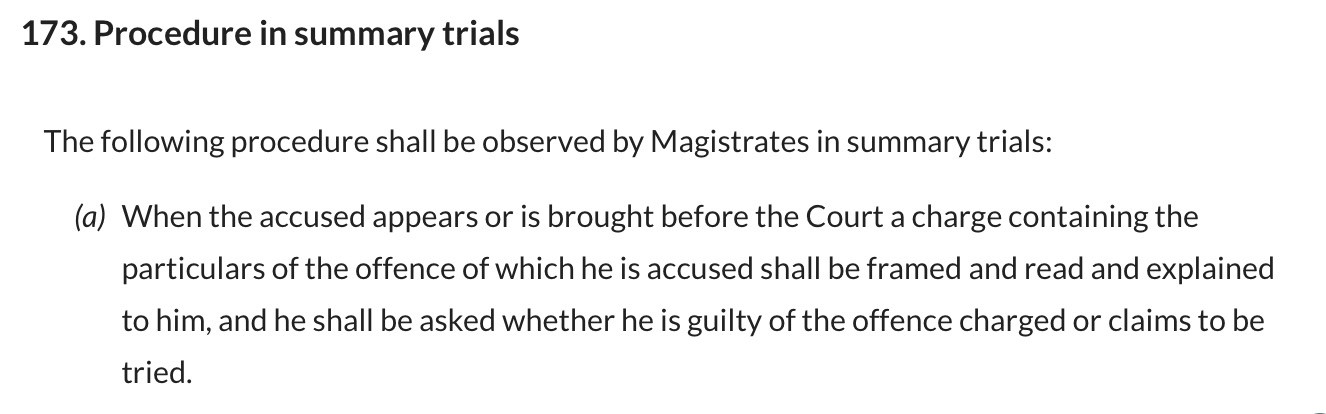
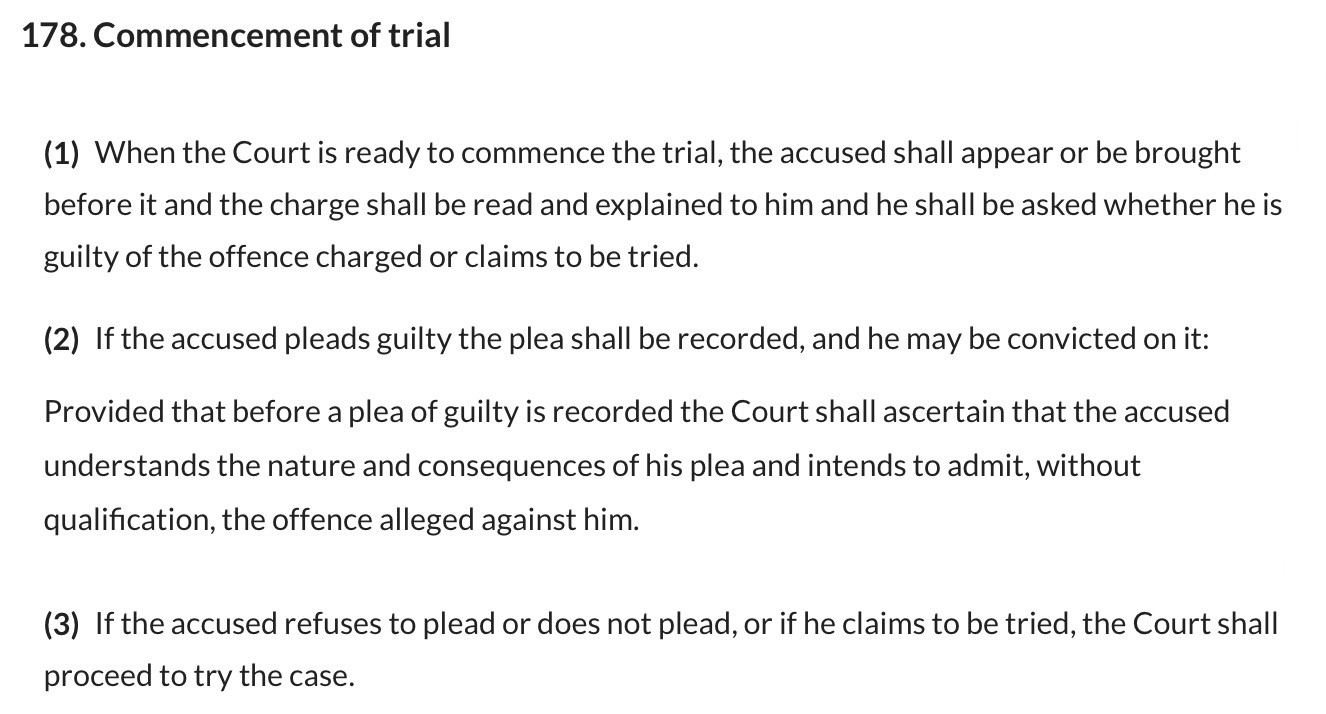
When it comes to formal charging, the process requires that the accused appear or be brought before the court where a charge containing the particulars of the offence shall be framed, read, and explained under Section 173(a) of the CPC for summary trials, or Section 178(1) of the CPC for trials before the High Court.
Neither provision explicitly mandates that these procedural steps must happen inside a traditional, built-for-purpose courtroom. Instead, they focus on the action, requiring that the accused appear or be brought before a judicial officer so the charge can be formally read, explained, and a plea recorded.
Because the law only requires the presence of the accused before the judge, along with proper statutory authorisation for the venue, these sections make it legally permissible to execute the formal charging process at alternative sites, such as a bedside in a hospital ward, if circumstances require it.
Remand proceedings outside of a conventional courtroom
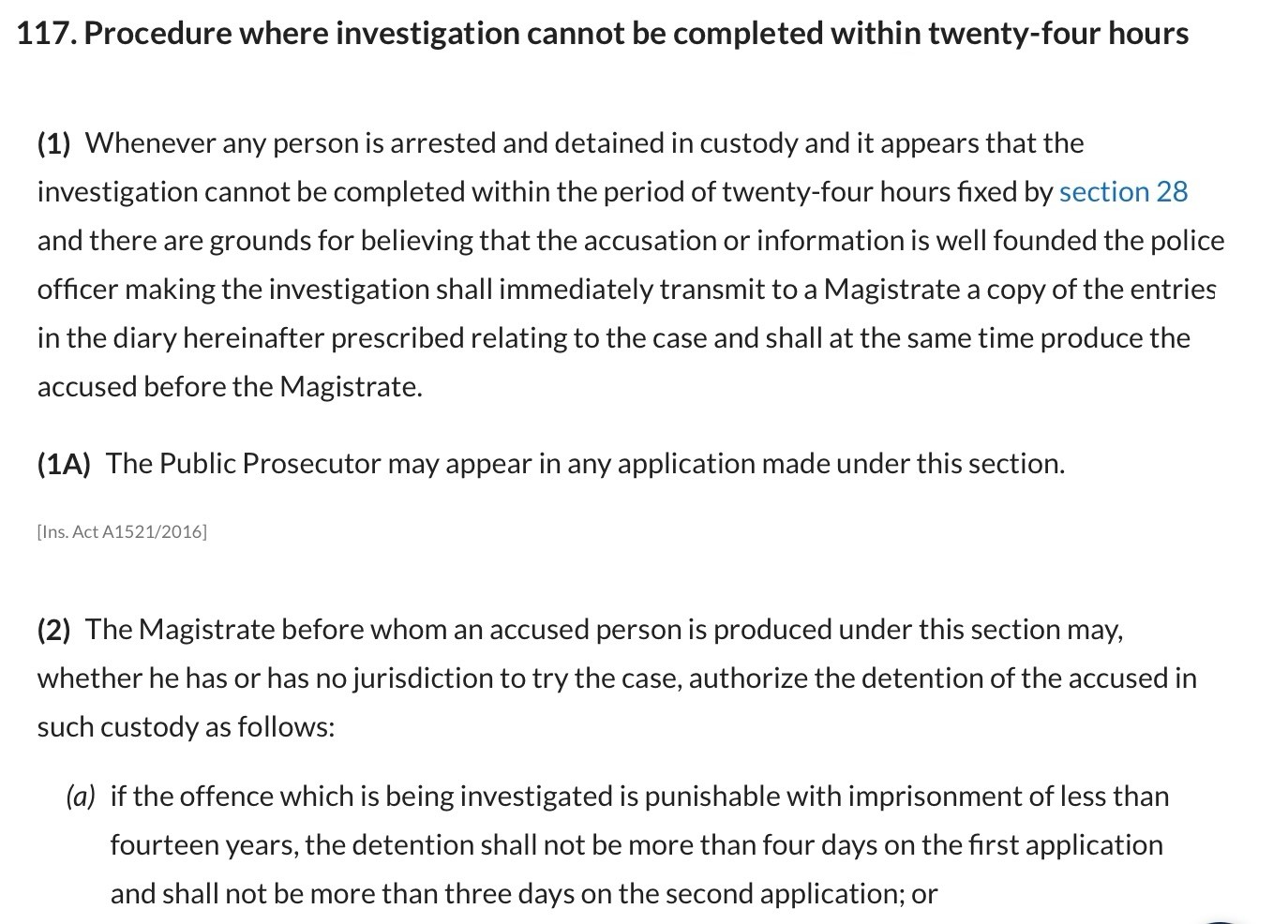
When investigations cannot be completed within twenty-four hours, Section 117 of the CPC governs the procedure where the police officer shall immediately transmit a copy of the diary entries to a Magistrate and produce the accused before the Magistrate.
Note how the provision does not explicitly mention the word “court”, but only requires that the accused person be produced before a Magistrate. Because Magistrates’ Courts possess the statutory flexibility under Section 76(3) of the SCA to sit at any place within their jurisdiction when necessity arises, remand hearings can legally take place at alternative locations such as police lock-ups or a hospital ward.
How about full-fledged trials?
In theory, even a full-fledged trial can proceed outside a conventional courtroom if the venue is formally declared an open court under the statutory provisions, or conducted online where appropriate via remote communication technology under Section 15A of the CJA.
However, in practice, conducting an entire trial in an alternative setting like a hospital ward or remotely is typically done as a last resort. Such an approach depends heavily on whether the accused is continuously fit enough to follow the proceedings and understand the evidence, while also requiring the courts to navigate significant logistical and public access constraints.
Ultimately, this comprehensive legal framework gives the judiciary the flexibility to conduct charges, remands, and trials outside conventional courtrooms when necessity demands it, ensuring that the administration of justice is never entirely gridlocked by external constraints.
For more insights into the Malaysian legal system such as this, do make sure to follow us on Facebook and Instagram or visit our official website. You can also read our articles on the popular Malaysian news aggregator app Newswav here.