
Proposed New Laws Announced in Budget 2027 & How They Will Impact Malaysians
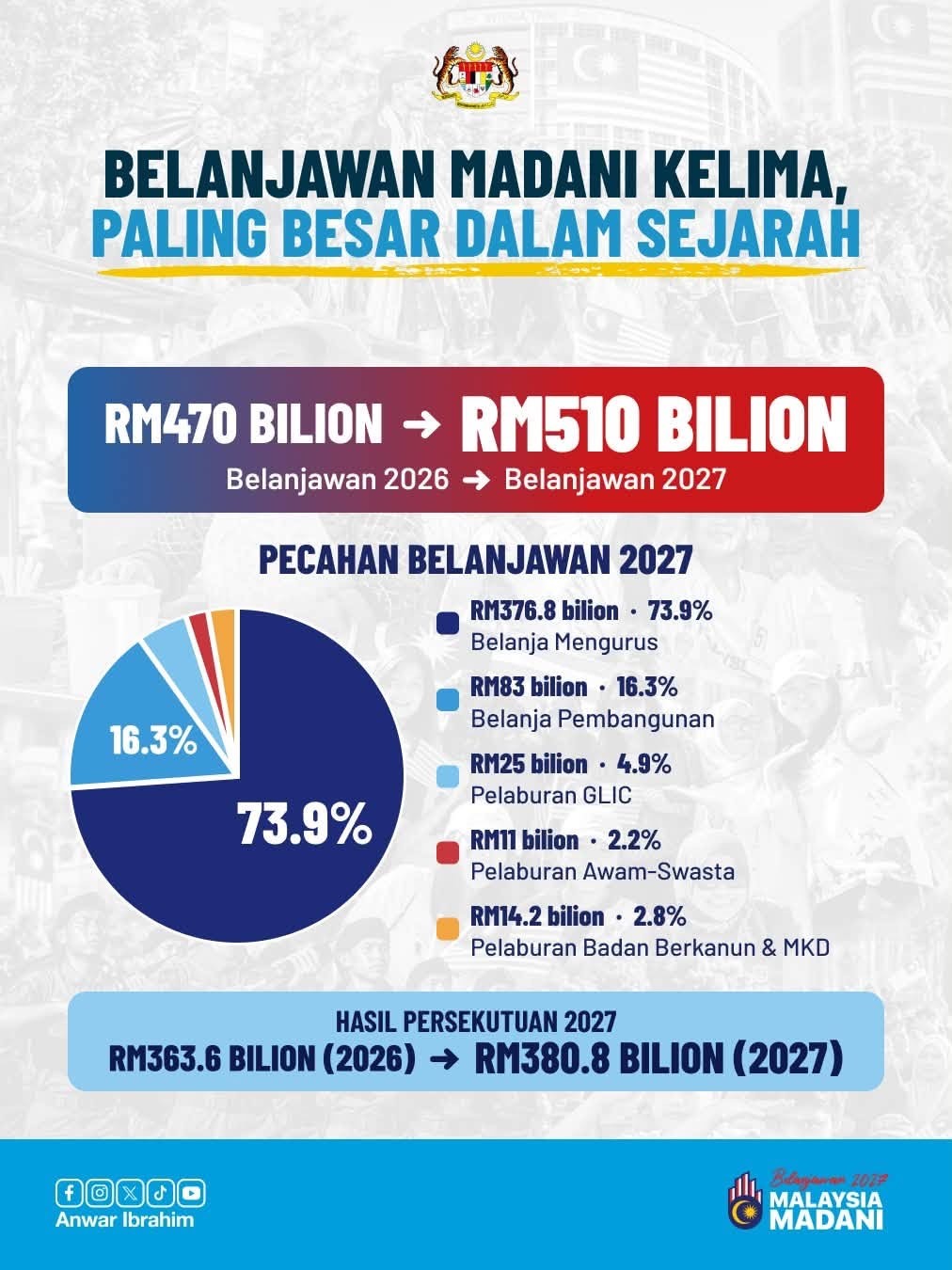
Prime Minister Datuk Seri Anwar Ibrahim tabled the highly anticipated Budget 2027 on Friday (9 October), the fifth budget under the MADANI Government since he was appointed the 10th Prime Minister in November 2022. Standing at a whopping RM510 billion (RM40 billion higher than Budget 2026), Budget 2027 is the largest federal budget in Malaysian history.
According to Anwar, the Budget encompasses:
Core Federal Expenditure
- Operating Expenditure: 73.9% (RM376.8 billion)
- Development Expenditure: 16.3% (RM83 billion)
Strategic Public & Agency Investments
- GLIC Investments: 4.9% (RM25 billion)
- Statutory Bodies & Minister of Finance Inc. Investments: 2.8% (RM14.2 billion)
- Public-Private Investments: 2.2% (RM11 billion)
Besides featuring various new policies, financial aid programmes, and funding allocations, Budget 2027 is also significant for bringing forth several new laws and statutory amendments that will have a far-reaching impact on Malaysians. Specifically, six notable new bills were announced by the Prime Minister during the tabling, which are detailed below.
Note that this article focuses strictly on measures requiring new legislation or legislative amendments. For example, this does not include the new RM2,000 minimum wage for 2027, which is governed under the existing National Wages Consultative Council Act 2011 and merely requires a new Minimum Wages Order issued by the Human Resources Minister under Section 23 of the Act. The various changes to income and business taxes are also not included, as they would be part of the Finance Bill 2027.
Here is a breakdown of the six proposed bills and how they will affect you.
The Senior Citizens Bill
According to Anwar, the new legislation will be drafted to address abandonment and strengthen the comprehensive care ecosystem. While he did not go into further detail about the bill, the Senior Citizens Bill has actually been in development by the Ministry of Women, Family and Community Development (KPWKM) since 2024.
A couple of days before Budget 2027 was tabled, KPWKM Minister Datuk Seri Nancy Shukri told Parliament that the bill aims to strengthen the welfare of senior citizens and protect them from neglect, abuse, and exploitation. She added that her ministry needs to complete the required processes, including further engagement with stakeholders who have requested additional consultations.
How it affects Malaysians:
Senior citizens and their families will gain stronger legal safeguards against abandonment, neglect, and financial exploitation. Additionally, family caregivers and institutional care providers will benefit from a clearer legal and regulatory framework that protects elderly dignity and upholds professional care standards across the country.

To further strengthen senior citizens’ welfare, Anwar also announced the following initiatives in Budget 2027:
Service Tax Reduction & Exemption:
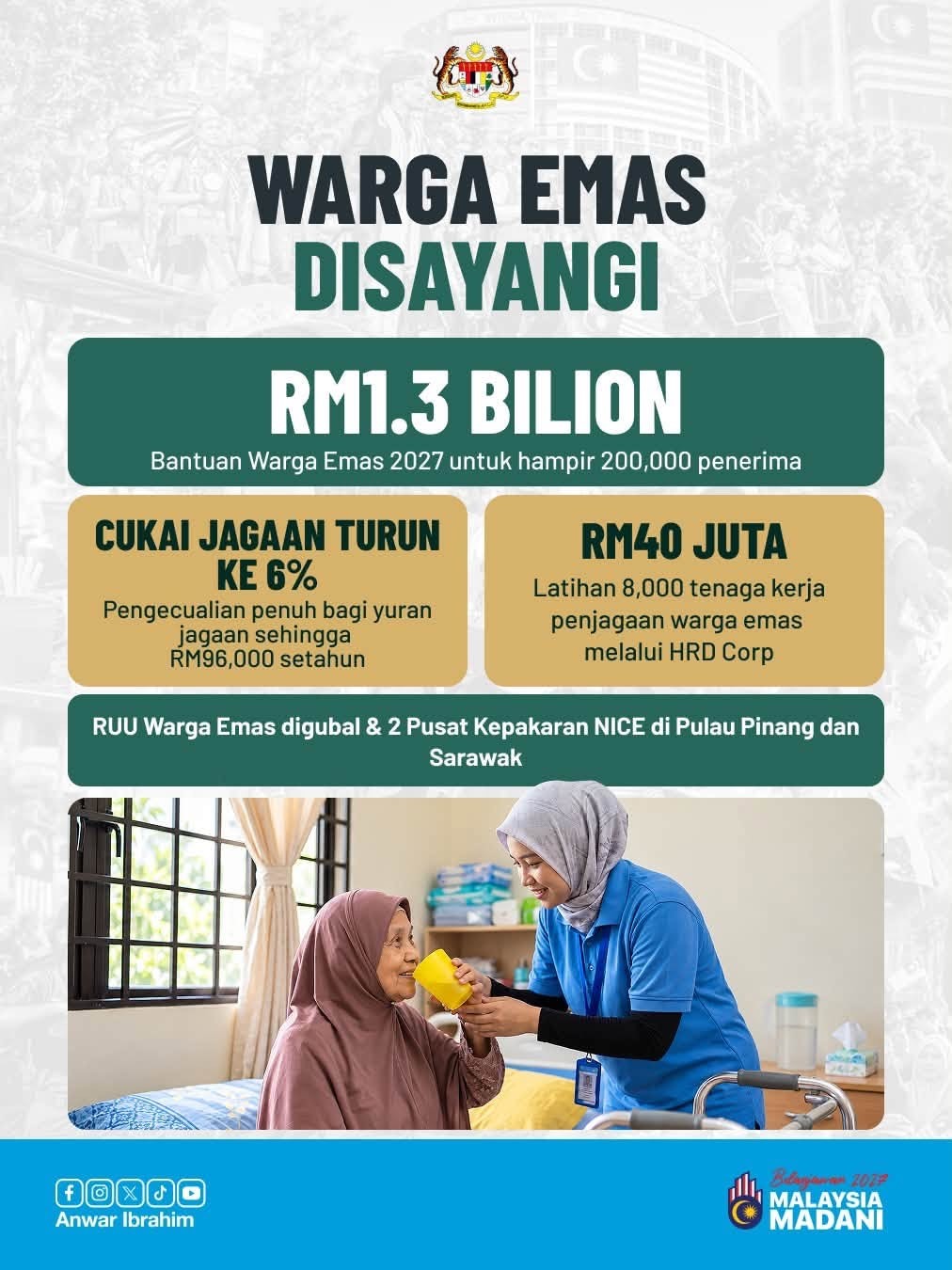
The service tax rate for elderly care services will be reduced from 8 to 6 per cent starting 1 January 2027. A service tax exemption will also be granted to elderly care services with annual fees of up to RM96,000.
Workforce Development:
- To develop a larger workforce in the elderly care sector, over RM40 million will be provided through HRD Corp to train 8,000 people and help them secure employment in this field.
Integrated Care Centres:
- Two Pusat Kepakaran Penjagaan Bersepadu (NICE) will be developed in Penang and Sarawak for training, research, and elderly care provisions.
Welfare Assistance Boost:
- Financial assistance for senior citizens will be increased to RM1.3 billion, benefiting nearly 200,000 elderly individuals.
EPF i-Emas Scheme:
- EPF members who reach the ages of 55 and 60 can opt for the i-Emas scheme to receive flexible monthly withdrawals, allowing their remaining savings to continue earning dividends.
Raising the bankruptcy threshold from RM100,000 to RM150,000
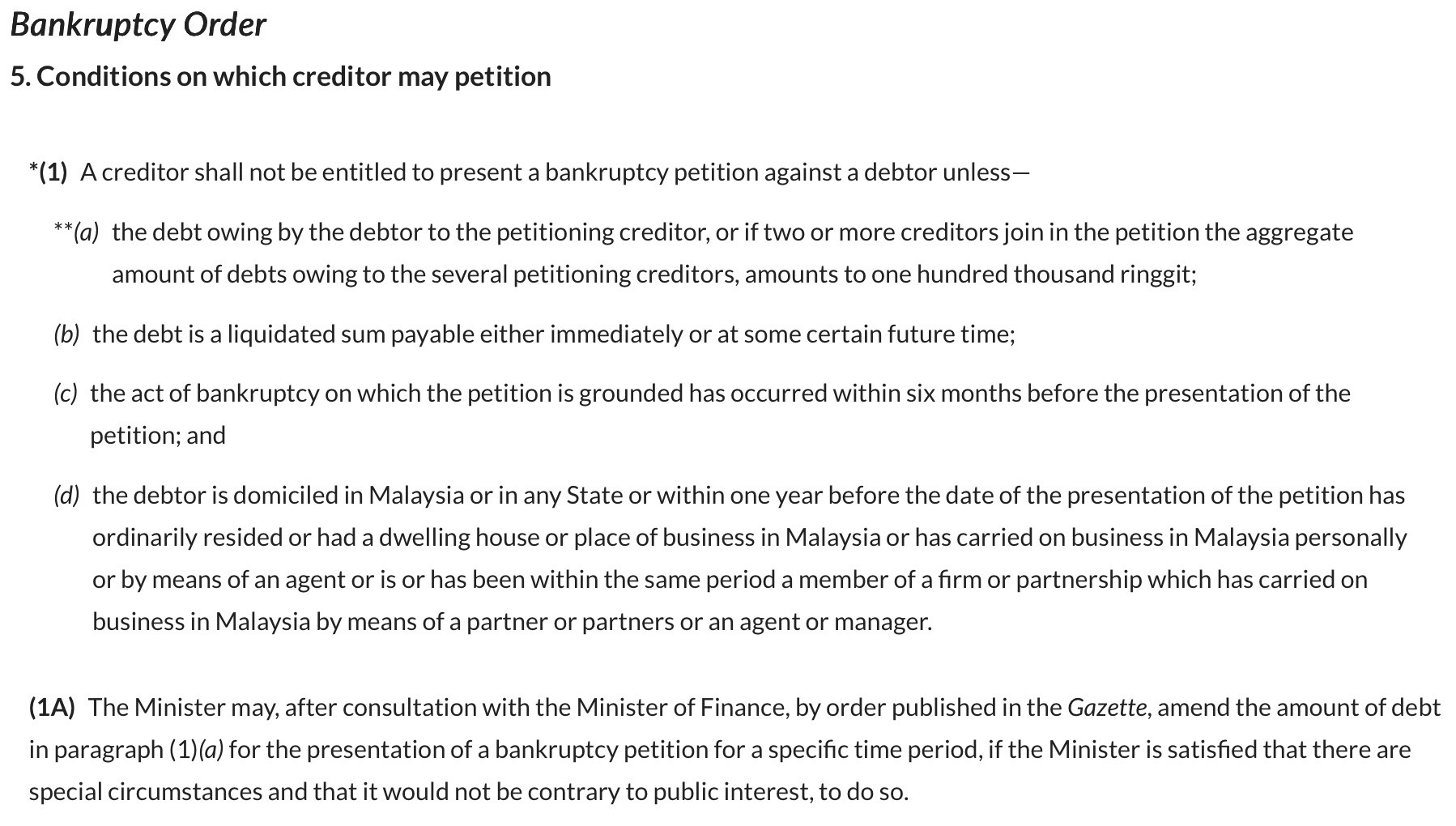
During his speech, the Prime Minister announced that starting next year, the bankruptcy threshold in Malaysia will be increased from RM100,000 to RM150,000. To give legal effect to this, the government has to table an amendment to Section 5(1)(a) of the Insolvency Act 1967. Alternatively, the Minister in charge of insolvency can publish a new order in the Government Gazette under Section 5(1A) of the Insolvency Act 1967 to raise the threshold to RM150,000.
What does not require legal amendments or a Gazette order is the announced expansion of the Second Chance Policy to cover primary caregivers, chronic patients, senior citizens, gig workers, and irregular income earners. Furthermore, the government will administratively strengthen automatic discharge under Section 33C of the Insolvency Act 1967 to expedite the discharge of eligible bankrupt individuals.
How it affects Malaysians:
Struggling individuals and lower-income earners gain stronger statutory protection against creditors initiating bankruptcy proceedings for minor debts. Meanwhile, eligible bankrupt individuals can expedite their discharge, rebuild their financial lives, register businesses, and re-enter the workforce much faster.

A new law to replace AUKU
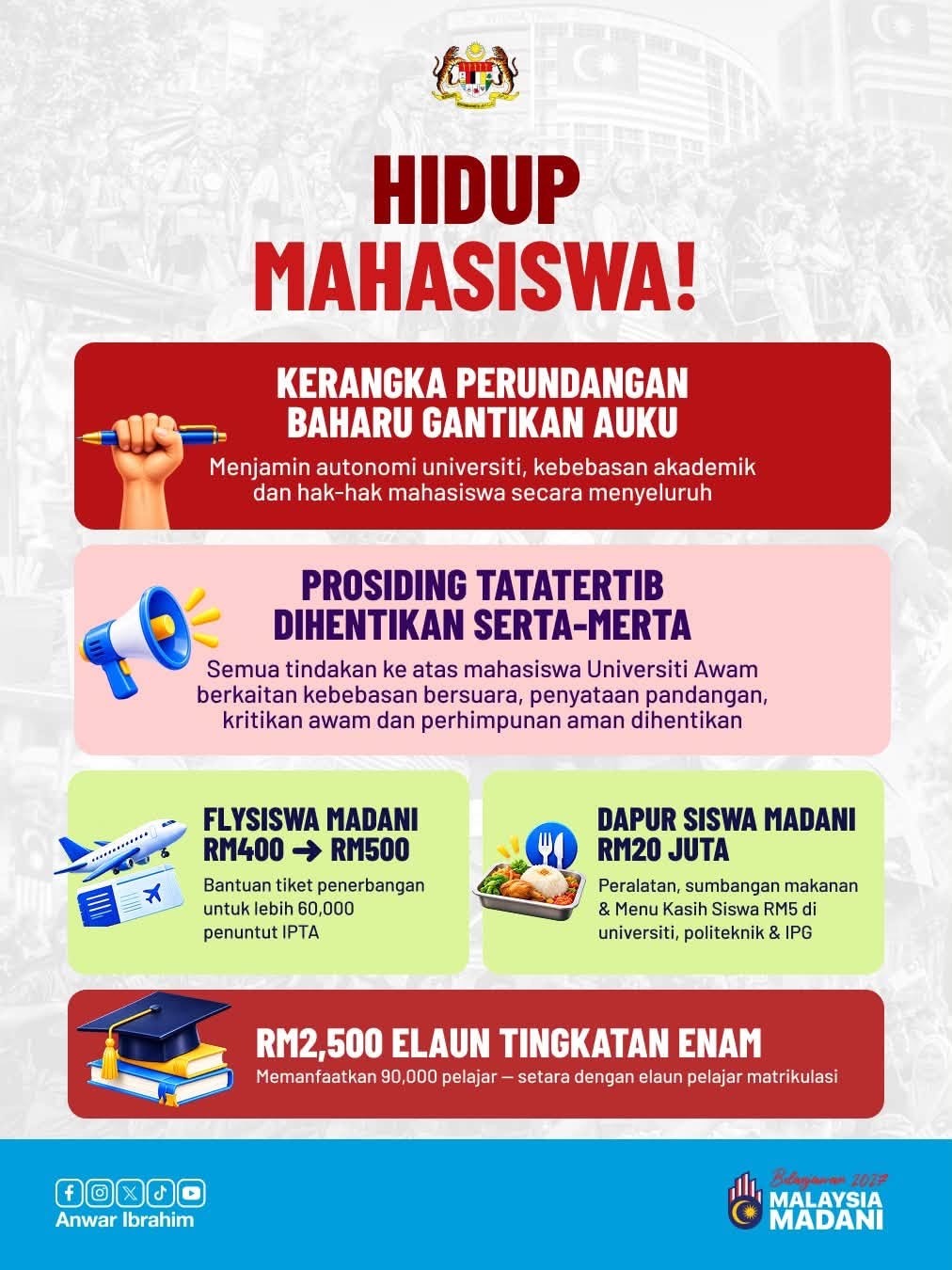
In addition, Anwar announced in Budget 2027 that the Ministry of Higher Education (MOHE) will introduce a comprehensive legal framework for higher education to replace the Universities and University Colleges Act 1971 (AUKU). Essentially, AUKU will be repealed and replaced by this new legislation, which will cover university autonomy, academic freedom, and student rights.
While the new bill is being drafted, the government has announced that all disciplinary proceedings at public universities relating to freedom of expression, the expression of views, public criticism, and peaceful assembly are discontinued with immediate effect.
How it affects Malaysians:
Should the government stay true to its promises, university students, student leaders, and academic staff will gain greater autonomy and legal protections to express views, organise peaceful assemblies, and participate in civic activism on campus without fear of internal disciplinary sanctions or academic suspension.
Amendments to the Road Transport Act 1987 (Drunk Driving & Commercial Telematics)

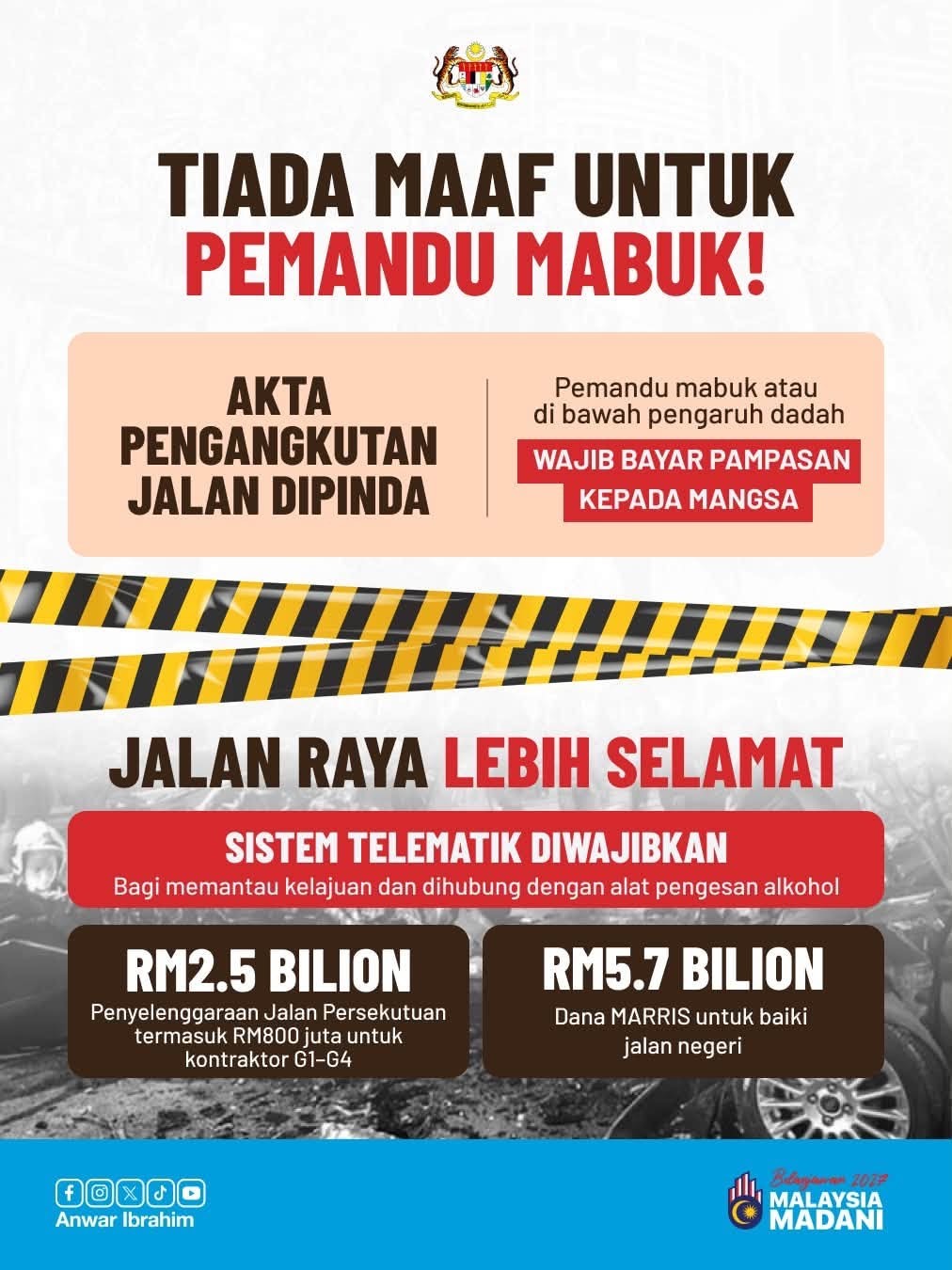
During his speech, the Prime Minister stated that the government will amend the Road Transport Act 1987 to mandate that drivers under the influence of alcohol or drugs pay compensation to victims.
Additionally, telematics systems will be made mandatory for commercial vehicles to monitor speed, location, and high-risk driving patterns, including integration with alcohol detection devices before driver start-up. Voluntary implementation will proceed through 2027 while the government develops a centralised driver database for enforcement purposes.
How it affects Malaysians:
Victims of drink-driving and drug-impaired accidents will receive direct statutory civil financial relief from offenders. Meanwhile, everyday road users and highway commuters will enjoy safer road conditions through real-time monitoring and stricter enforcement on commercial buses, lorries, and fleet vehicles.
The E-Commerce Bill
Anwar stressed that the government takes seriously the concerns raised by small traders regarding foreign e-commerce companies entering the Malaysian market without proper oversight and enforcement.
To address this, the government is moving swiftly to examine legislative and enforcement measures to safeguard local Micro, Small, and Medium Enterprises (MSMEs) from unfair competition and ensure that products purchased by the people are safe. As part of these efforts to strengthen accountability among online platforms and sellers, the E-Commerce Bill will be tabled in the next parliamentary sitting.
How it affects Malaysians:
Local MSMEs and small traders will gain greater protection from unfair competition posed by unregulated foreign e-commerce entities. Meanwhile, everyday Malaysian consumers will be assured that products bought online meet standard safety measures.

The Government-Owned Entities Bill
To strengthen governance and public financial management, the Prime Minister announced that the Government-Owned Entities Bill will be drafted. The new legislation will establish stricter statutory governance frameworks for government companies and statutory bodies entrusted with managing public funds and assets, with the explicit aim of preventing a recurrence of major financial abuses such as the 1MDB scandal, as well as the Tabung Haji and FELDA crises.
Alongside this proposed legislation, the government is reinforcing public financial management rules regarding loan repayments and interest income collected by Federal Statutory Bodies. Under existing policy and strengthened transparency measures:
- All loan repayments collected, including education and business loans financed through Operating and Development allocations and channelled directly to Federal Statutory Bodies, must be used solely for their approved original purposes and target groups.
- Interest income generated from these funds is subject to the same strict restriction.
- Loan repayments collected using Federal Government funds cannot be used to finance the operating expenditure of statutory bodies, other programmes, or activities beyond the scope of original allocation approvals.
How it affects Malaysians:
Taxpayers and the public gain greater statutory oversight over public funds, ensuring that money managed by state-owned enterprises and statutory bodies is safeguarded against corruption and mismanagement. Furthermore, students and small business owners borrowing from federal loan agencies can be assured that repaid funds are recycled directly back into funding future education and business loan recipients rather than being diverted to administrative overheads.
For more insights into the Malaysian legal system such as this, do make sure to follow us on Facebook and Instagram or visit our official website. You can also read our articles on the popular Malaysian news aggregator app Newswav here.