
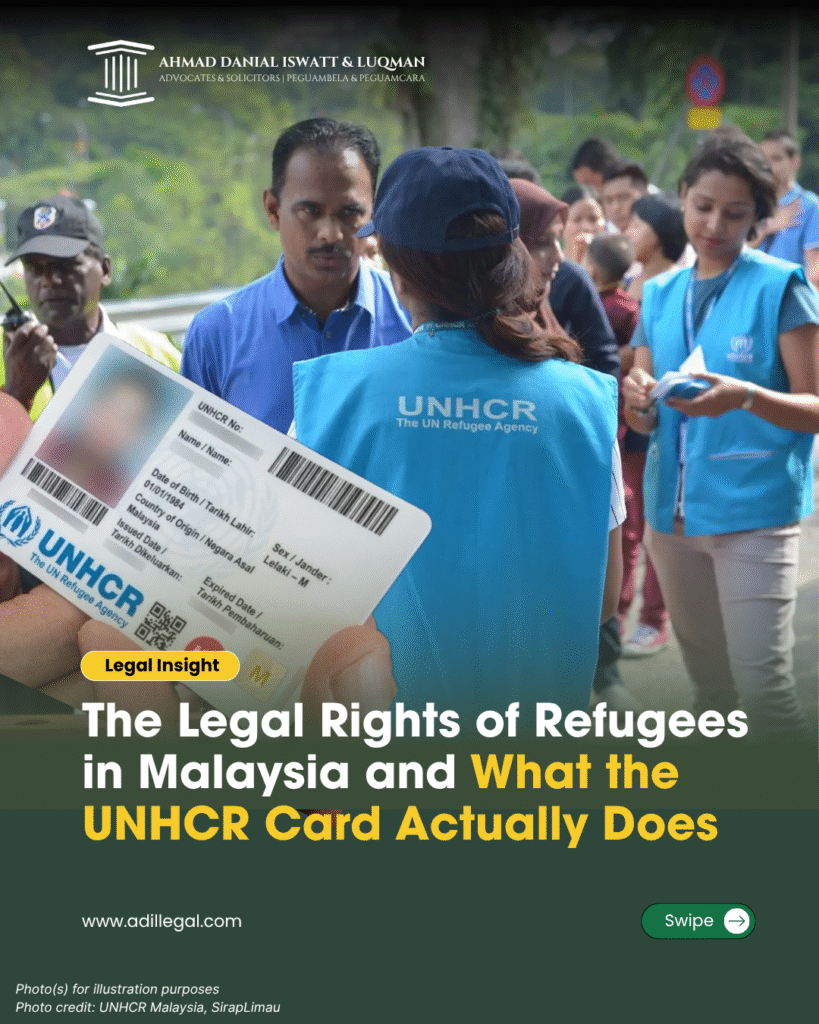
The Legal Rights of Refugees in Malaysia and What the UNHCR Card Actually Does
Following public confusion and conflicting media reports regarding the legal standing of refugees in Malaysia, Immigration Director-General Datuk Zakaria Shaaban recently issued a statement emphasising that United Nations High Commissioner for Refugees (UNHCR) cardholders remain strictly subject to Malaysia’s immigration laws. In clarifying remarks attributed to him, Zakaria firmly denied ever stating that stateless Rohingya individuals were not illegal immigrants.
He explained that whilst valid cardholders are granted narrow exemptions regarding two specific administrative violations, namely entering without a valid pass and overstaying, they remain fully accountable under the Immigration Act 1959/63 for all other offences, including working without a valid permit. Furthermore, employers who hire refugees without legal authorisation remain liable for legal action.
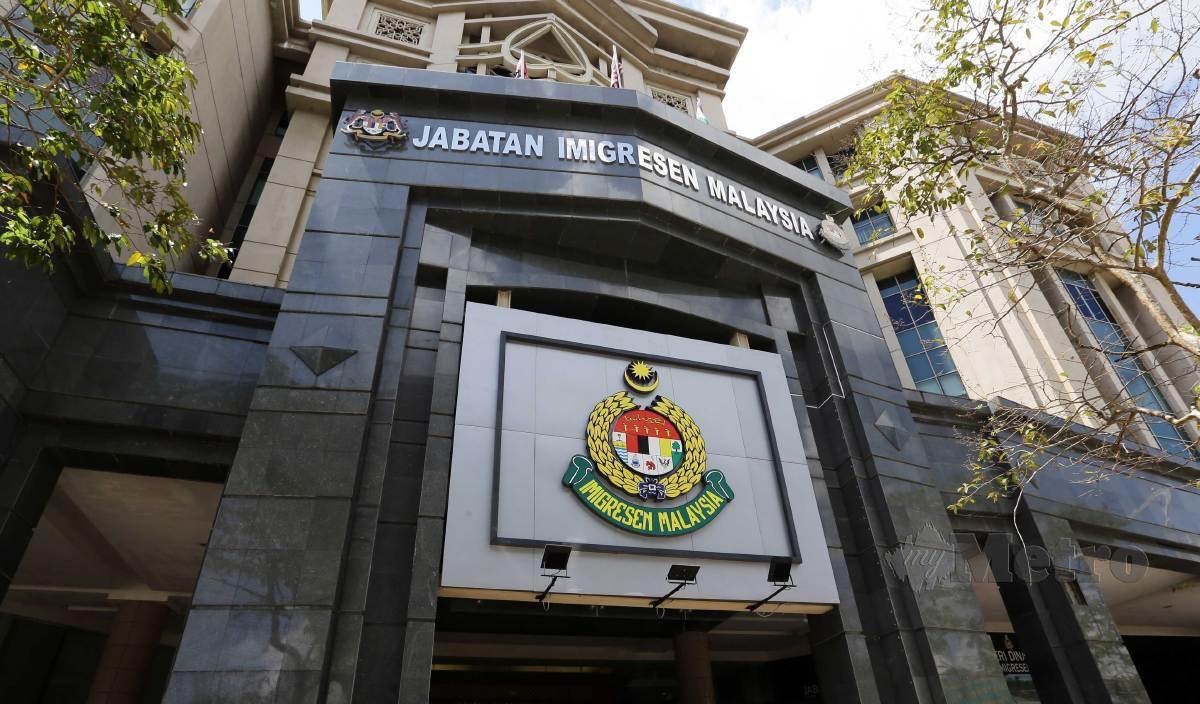
Zakaria added that refugee oversight operates under National Security Council (MKN) Directive No. 23 (Policy and Mechanism for the Management of Refugees and Asylum Seekers) and is overseen by the Cabinet Committee on Refugees and Asylum Seekers, chaired by Deputy Prime Minister Datuk Seri Dr Ahmad Zahid Hamidi. His statement reinforces the government’s stance that discretionary administrative exemptions do not grant blanket legal immunity or legal immigration status.
To understand the regulatory framework governing refugees and asylum seekers in Malaysia, it is vital to examine the strict parameters of Malaysian immigration law, the administrative role of the UNHCR card, and the government’s transition towards state-managed registration.
No recognised refugee status under Malaysian law
From a strict statutory perspective, Malaysia has no domestic refugee law. The country is not a signatory to the 1951 Convention Relating to the Status of Refugees or its 1967 Protocol (UNHCR Asia-Pacific Regional Framework). Consequently, Malaysian legislation makes no formal legal distinction between a refugee, an asylum seeker, and an undocumented migrant.
Under Section 6 of the Immigration Act 1959/63, any non-citizen entering or residing in Malaysia must hold a valid pass or entry permit.
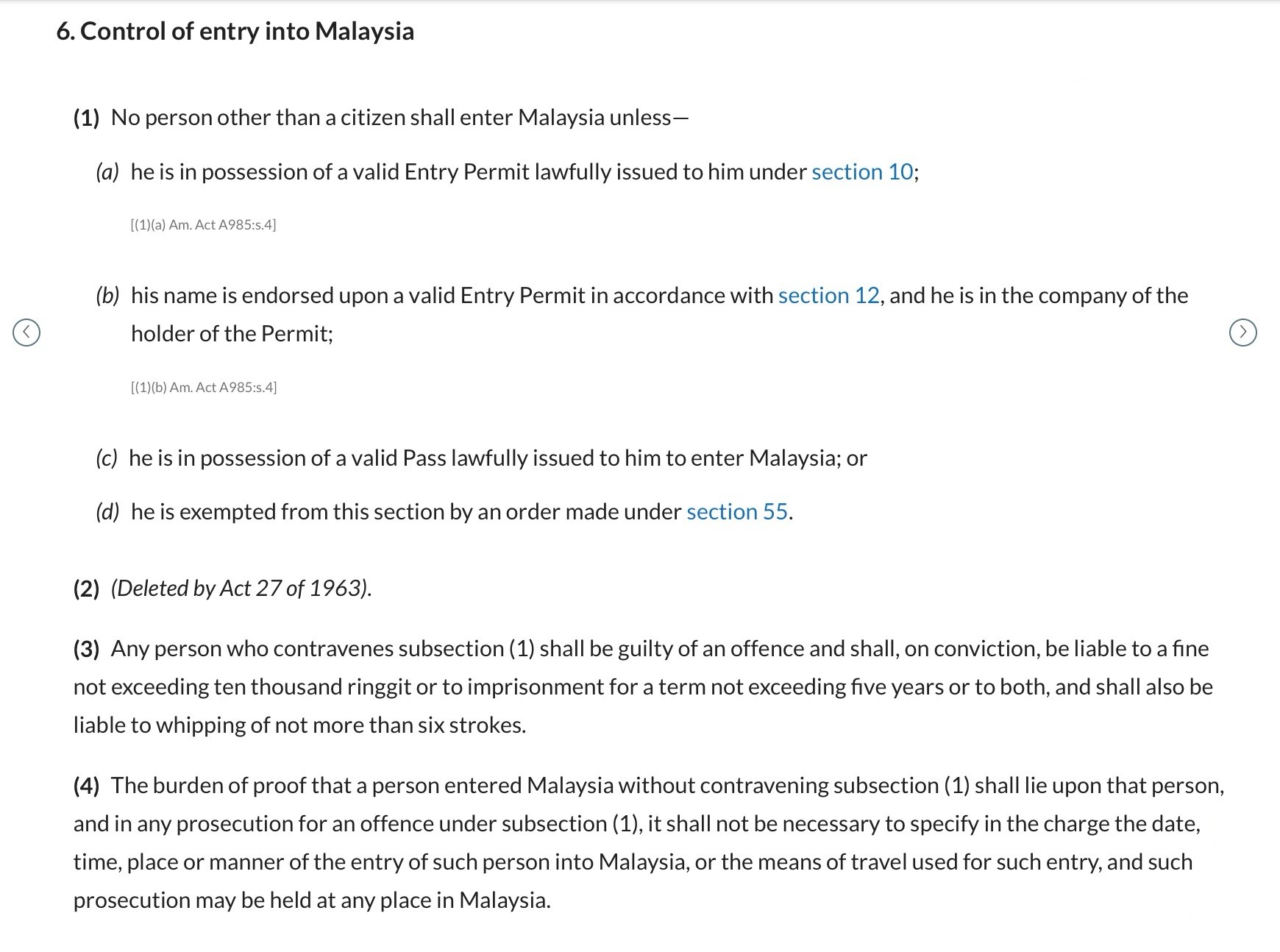
Without these official documents:
- Foreign nationals remain legally classified as “illegal immigrants”
- Individuals remain subject to administrative detention, fines, prosecution, and eventual deportation
- There is no statutory right to work, enrol in state education, or hold a Malaysian driving licence
Although Malaysia observes customary international norms such as non-refoulement (the principle prohibiting returning individuals to places where they face persecution), this practice is maintained via executive directives, primarily MKN Directive No. 23, rather than statutory rights.
The UNHCR’s role
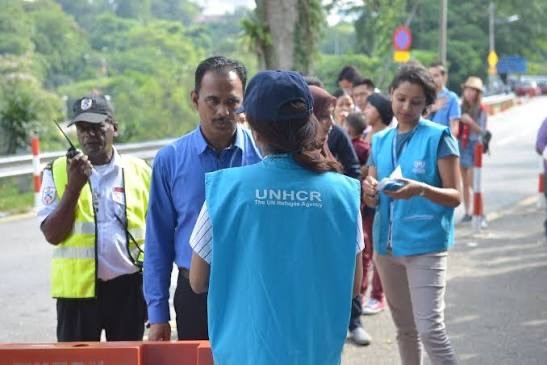
Because Malaysian domestic law offers no statutory framework to recognise or protect refugees, an administrative gap exists between national enforcement mechanisms and international protection needs. To manage this without altering national legislation, state authorities permit the UNHCR to operate in the country under executive tolerance.
In this context, the UNHCR conducts independent Refugee Status Determination (RSD) procedures. The identity card issued to verified individuals acts as an informal administrative document accepted by Malaysian law enforcement on a discretionary basis. Understanding this document requires breaking down what it specifically covers and what it cannot override under domestic law.
The scope and limits of the UNHCR card
What the card provides:
Identity and Protection Verification:
It serves as official documentation confirming that the holder has been identified by the UN as requiring international protection
Specific Administrative Exemptions:
Valid cardholders are exempted from prosecution for two specific offences under the Immigration Act 1959/63, namely lacking a valid pass/travel document and overstaying
Reduction of Arrest Risk:
Authorities generally recognize the card during spot checks to prevent summary detention purely for undocumented entry, provided the card is verified as genuine
Basic Access Services:
Cardholders gain access to primary health services at discounted foreign rates (typically a 50% discount off standard foreign patient fees) at public facilities, along with aid from non-governmental organisations (NGOs)
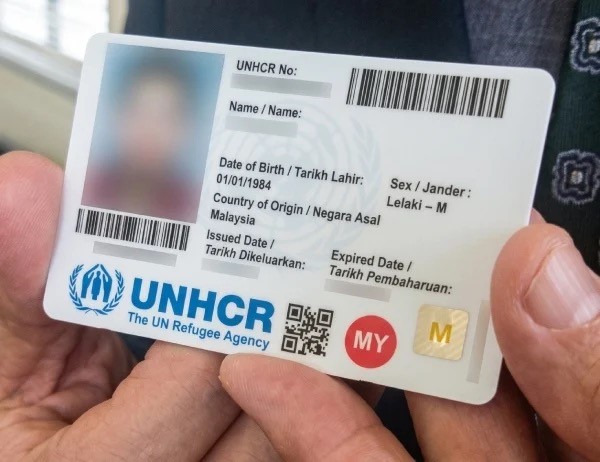
What the card does not provide:
It is not an Immigration Pass:
It does not confer lawful immigration status under the Immigration Act 1959/63
It confers no general legal immunity:
Cardholders remain fully subject to domestic criminal laws and general immigration enforcement for non-exempted violations
It is not a driving licence:
UNHCR cards do not grant driving privileges; refugees cannot legally obtain a Malaysian driving licence
It is not a work permit:
Cardholders lack statutory employment rights. Working without an official permit remains an offence for both the holder and the employer under Section 55B of the Immigration Act 1959/63
The state-managed Refugee Registration Document (DPP)
To address security, data sovereignty, and administrative oversight, the Malaysian government initiated a policy shift towards direct state management of refugee records.
Under the direction of the Cabinet Committee on Refugees and Asylum Seekers, the government instituted the Refugee Registration Document (Dokumen Pendaftaran Pelarian or DPP) programme in line with MKN Directive No. 23.
Key elements of the state-led framework:
Halt on UNHCR Processing:
Independent registration by the UN refugee agency has been suspended by Cabinet order to centralise processing under state oversight
-
Government-Managed Data
The Home Ministry and Immigration Department collect biometric data, facial recognition, iris scans, and personal histories to build an independent national registry
Operational Rollout:
Initial operations (Phase One) prioritise recording individuals within immigration detention depots, transferring eligible candidates to designated centres such as the Bidor Special Separation Centre, before expanding nationwide
Multi-Agency Screening:
Status tracking involves security vetting by law enforcement agencies, including the Royal Malaysia Police (PDRM) and the Immigration Department, through a dual-committee structure
Policy Objective:
The Home Ministry has explicitly stated that the DPP framework is designed to give the state precise data for security oversight. The document does not confer permanent residency, citizenship, or permanent settlement rights; long-term outcomes remain third-country resettlement or eventual repatriation
State oversight and policy outlook
The formal clarification by the Immigration Department and the rollout of the DPP framework highlight Malaysia’s insistence on maintaining strict enforcement of domestic immigration laws while standardising refugee registration under direct state control.
Until statutory amendments are made to the Immigration Act 1959/63, displaced persons in Malaysia continue to exist within an executive policy framework that balances strict domestic law enforcement with selective administrative exemptions.
For more insights into the Malaysian legal system such as this, do make sure to follow us on Facebook and Instagram or visit our official website. You can also read our articles on the popular Malaysian news aggregator app Newswav here.