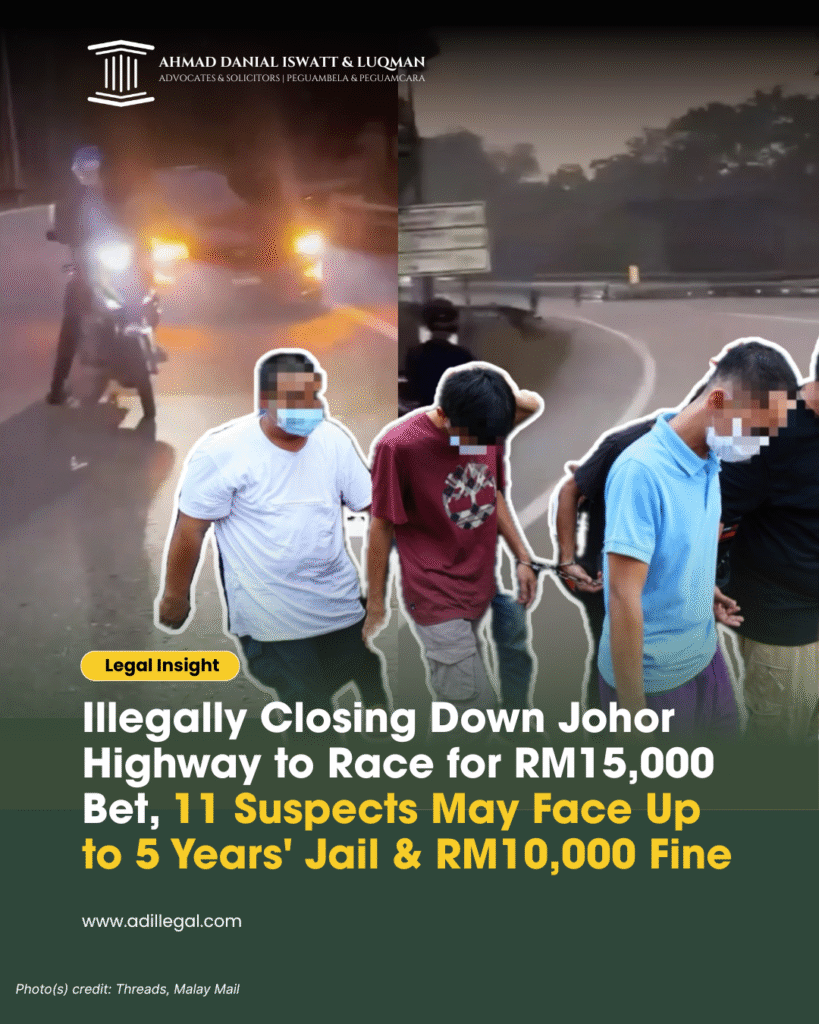
Illegally Closing Down Johor Highway to Race for RM15k Bet, 11 Suspects May Face Up to 5 Years' Jail & RM10k Fine
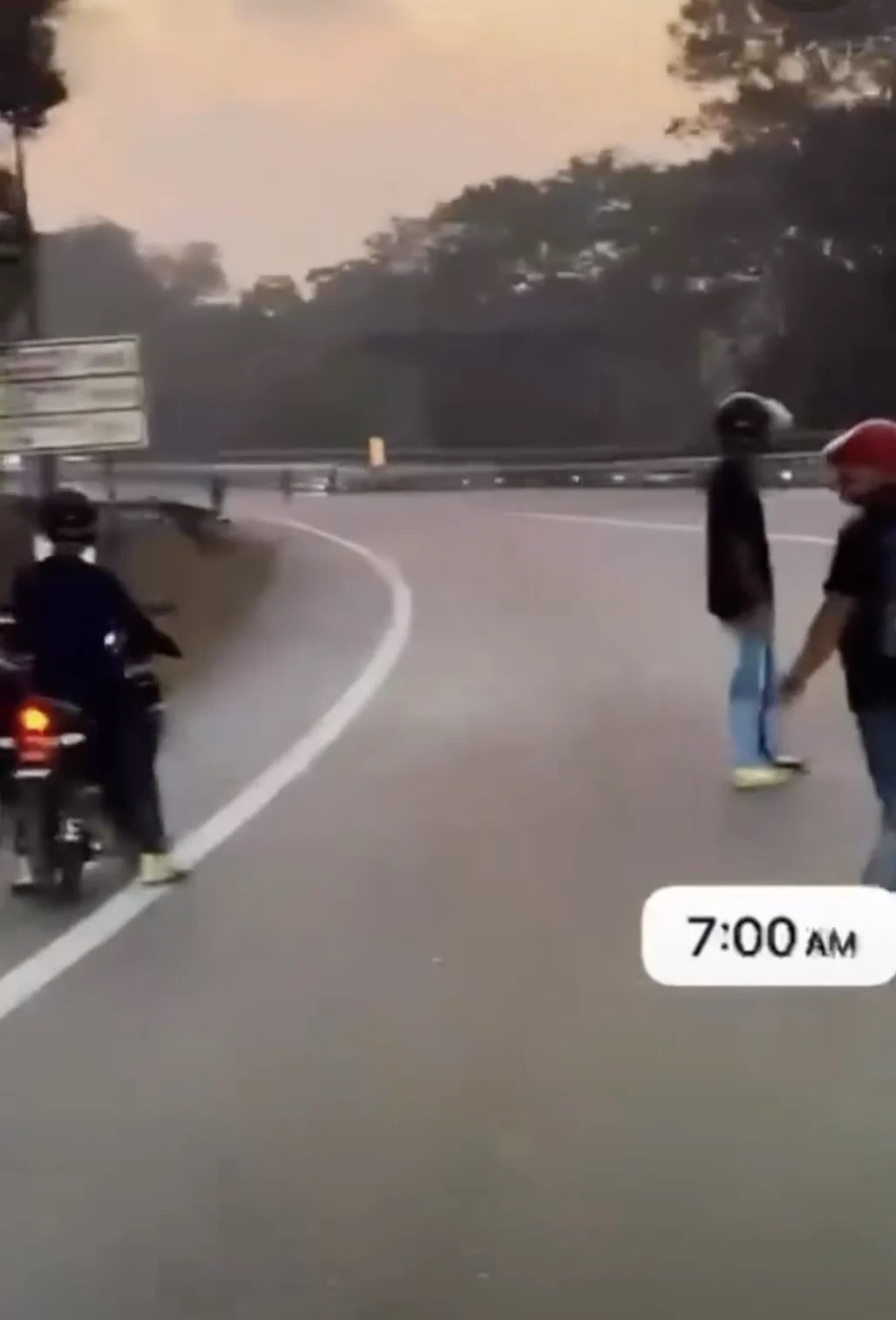
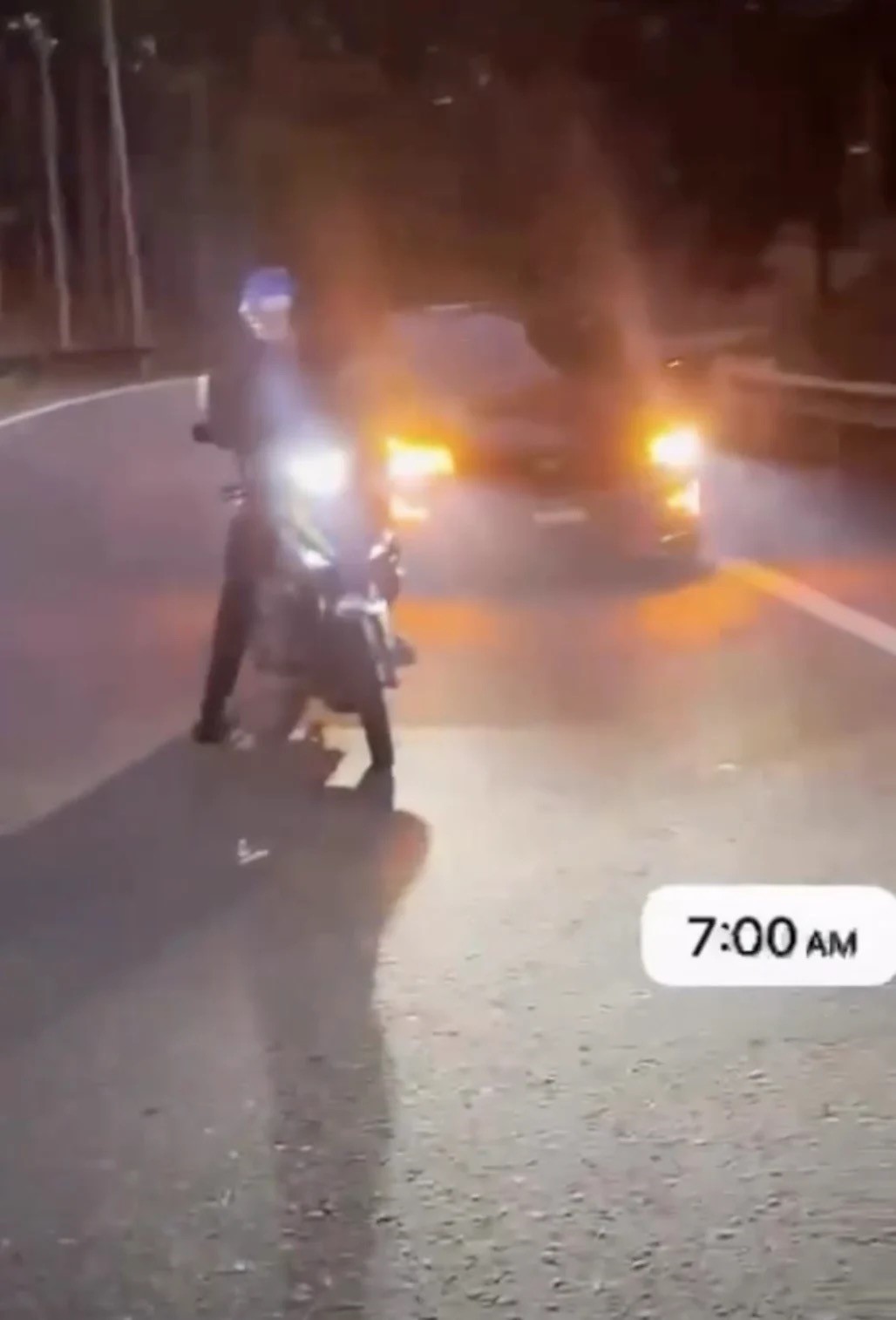
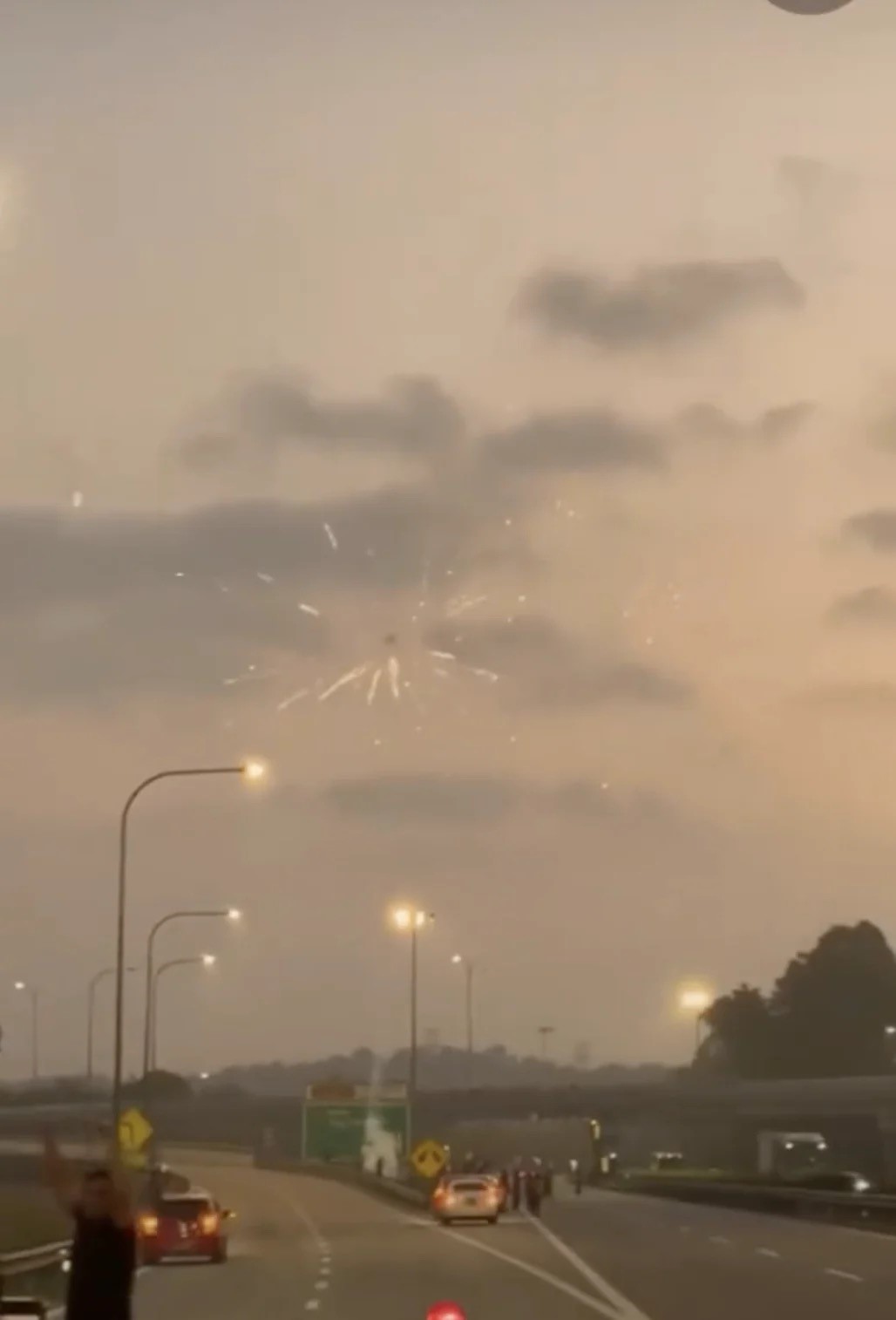
A shocking incident transpired in Kulai, Johor, when road users on the Malaysia-Singapore Second Link (Linkedua) on 22 August found a section of the expressway illegally closed off by irresponsible individuals staging a race. Videos of the incident have since gone viral, with the group allegedly blocking a stretch from KM33 (Senai Toll Exit) to KM31 (Johor Premium Outlets Exit) at around 7 AM.
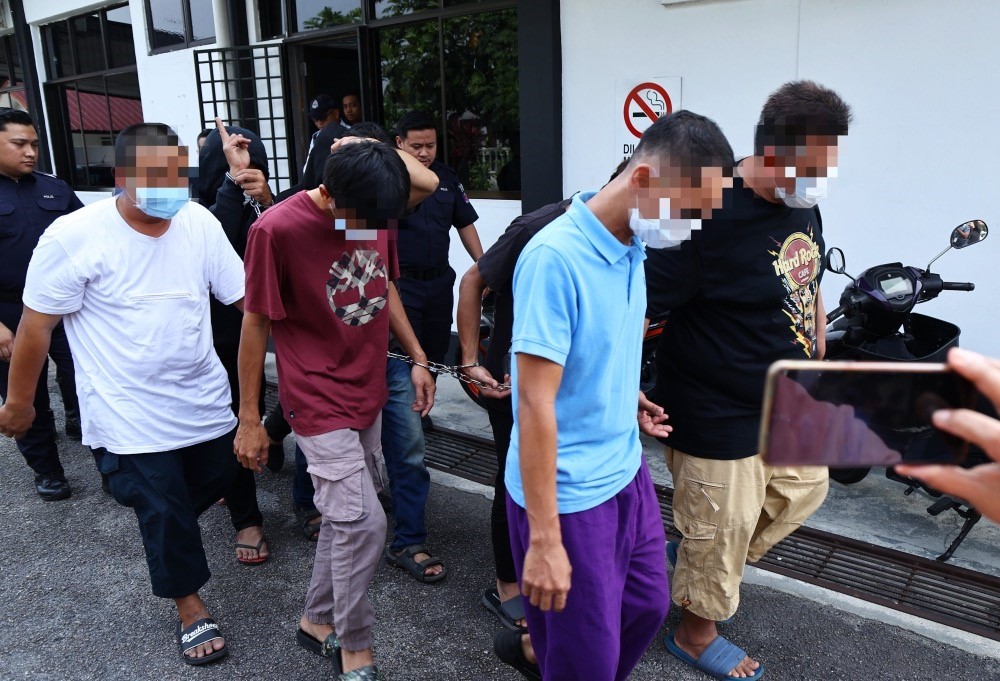
Following this, the Royal Malaysia Police (PDRM) arrested several individuals in connection with the incident. On 24 August, the Kulai Magistrate’s Court issued a 4-day remand orderagainst eight local men, including a motoring influencer, to assist with investigations.
On 26 August,three more men were arrested in Kuala Lumpur, believed to be a ‘jockey’ and two spectators of the illegal race. Bukit Aman Traffic Investigation and Enforcement Department director Hasbullah Ali also revealed that, following the questioning of the detained suspects, it is believed that the illegal race involved RM15,000 in betting money.
So, what potential charges do the suspects face? Join us as we examine the relevant laws and regulations below.
Relevant offences under the Road Transport Act 1987
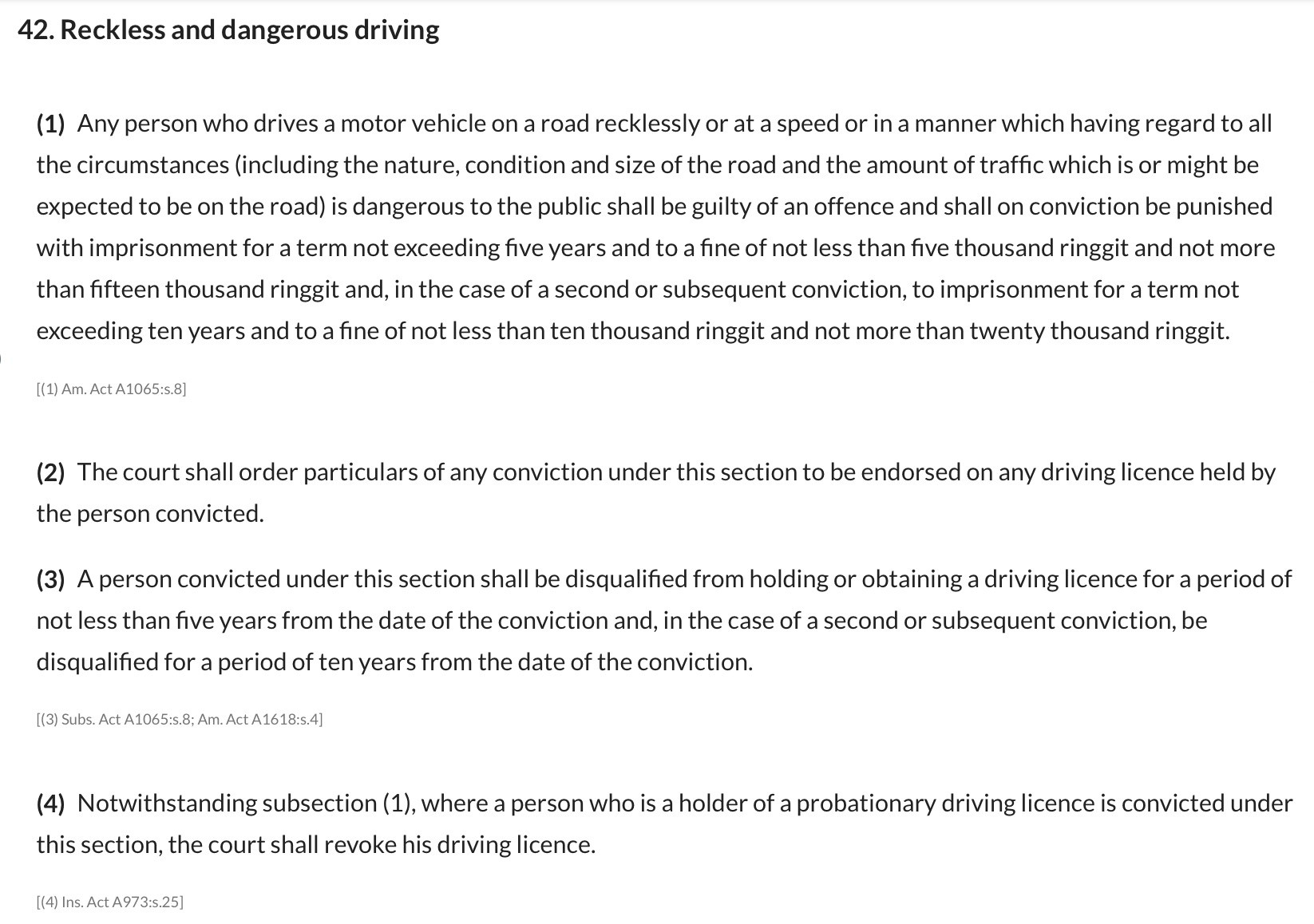
Section 42 (Reckless and dangerous driving)
According to Section 42 of the Act, an individual is considered to have committed an offence of reckless and dangerous driving if they drive a motor vehicle on a road recklessly or at a speed or in a manner which having regard to all the circumstances (including the nature, condition and size of the road and the amount of traffic which is or might be expected to be on the road) is dangerous to the public.
If convicted, offenders face up to 5 years of imprisonment and a fine between RM5,000 and RM15,000. Moreover, for a second or subsequent conviction, the punishment is increased to up to 10 years in jail and a fine between RM10,000 and RM20,000.
Additionally, Section 42(3) prescribes that those convicted be disqualified from holding or obtaining a driving licence for 5 years from the date of conviction, and if they’re a holder of a probationary driving licence, the licence would be revoked. In a second or subsequent conviction, the disqualification would be for a period of 10 years from the date of conviction.
Section 48 (Obstruction by vehicle on road)
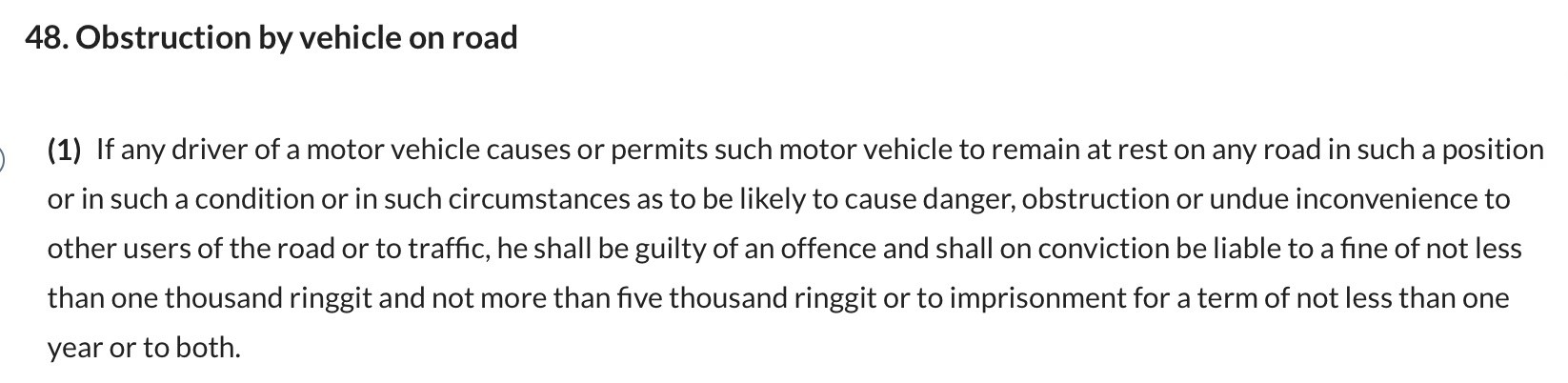
This provision establishes that it is an offence to park or leave a vehicle on any road in such a position as to likely cause danger, obstruction, or undue inconvenience to other road users or traffic.
Those found guilty may face a fine of between RM1,000 and RM5,000, imprisonment for up to one year, or both. Additionally, Section 48(2) empowers authorities to clamp or remove the vehicle.
Section 81 (Competitions and speed trials on public road)
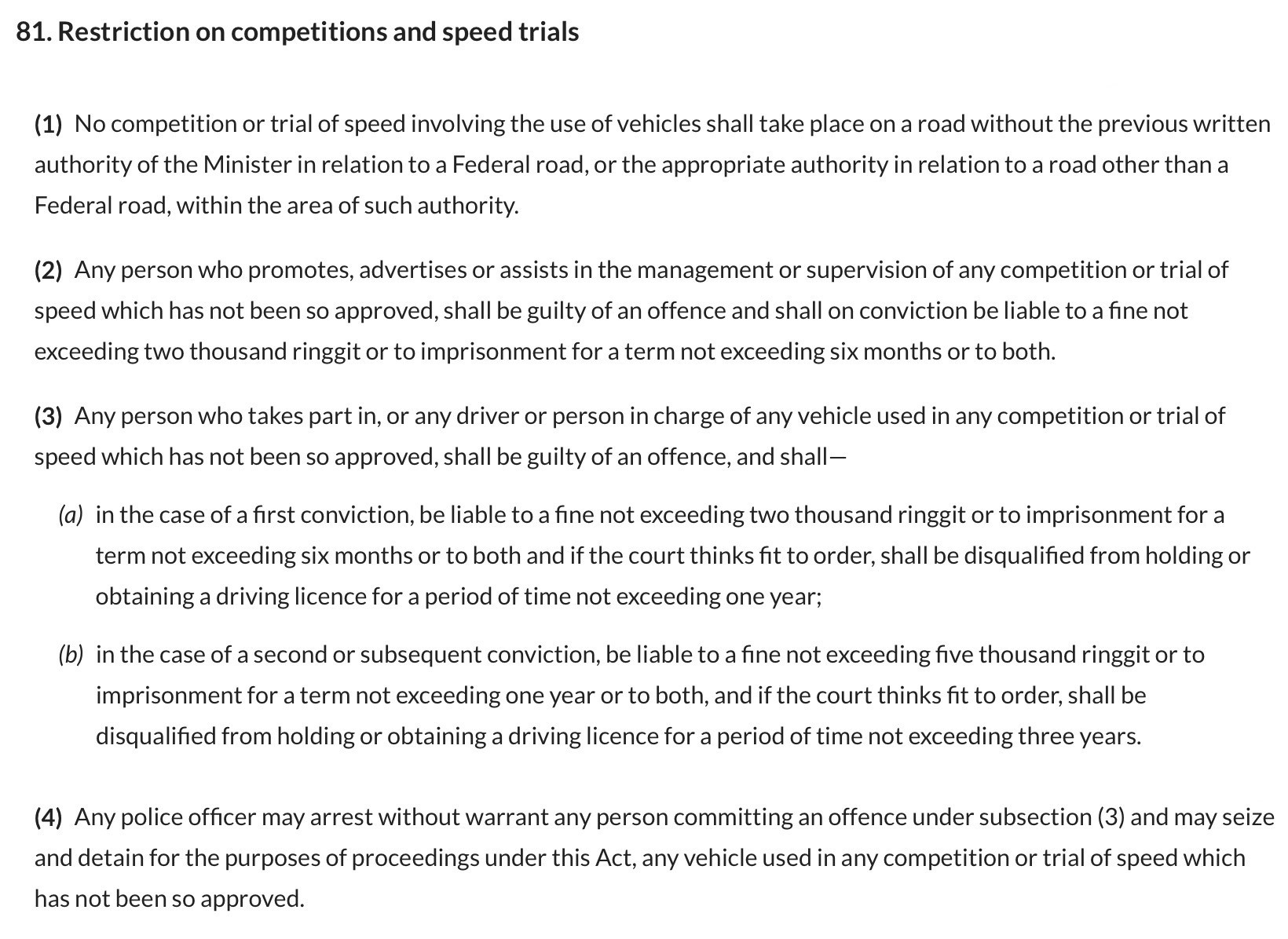
Under Section 81, the suspects may face legal consequences for allegedly engaging in an unauthorised speed trial on a public road without prior written approval.
Participants can be penalised under subsection (3) with a fine of up to RM2,000, up to six months’ imprisonment, or both, plus potential licence disqualification. Meanwhile, organisers, promoters, or assistants (such as ‘jockeys’ or coordinators) face similar penalties under subsection (2), and police are authorised to seize the vehicles under subsection (4).
Do note that while the recently passed Road Transport (Amendment) Bill 2026 further criminalises street racing and speed-testing with heavier penalties, including fines up to RM10,000 and up to two years’ jail for a first conviction, the amendment is yet to be enforced. Hence, it’s not applicable to this case.
Section 110 (Obstruction and interference)
Under Section 110, individuals who, without lawful authority, place any vehicle, material, or matter on or near a road in a manner that obstructs or endangers traffic commit an offence punishable by a fine not exceeding RM1,000.
Offences under the Penal Code
Section 279 (Rash driving on public way)
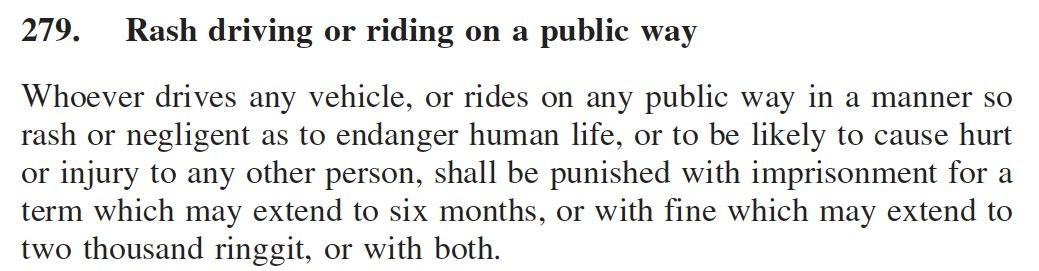
Beyond the Road Transport Act 1987, there are also provisions under the Penal Code relevant to the case. These include Section 279, which prescribes the offence of rash driving on a public way.
Under this provision, an individual is considered to have committed rash driving or riding on a public way should they drive a vehicle in a manner so rash or negligent as to endanger human life or likely to cause injury to any person. If convicted, offenders may face up to 6 months in jail, or up to RM2,000 fine or both.
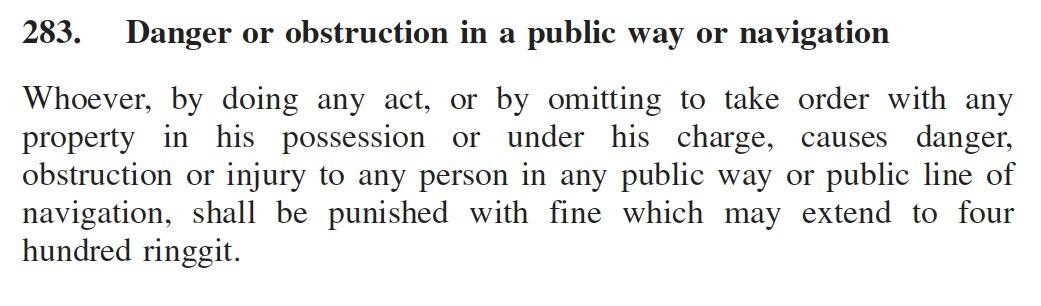
Section 283 (Danger or obstruction in a public way or navigation)
Another potentially relevant provision is Section 283, which deals with causing danger or obstruction in a public way. Anyone found to have performed an act that causes danger, obstruction, or injury to any person in a public way can be punished with a fine of up to RM400 upon conviction.
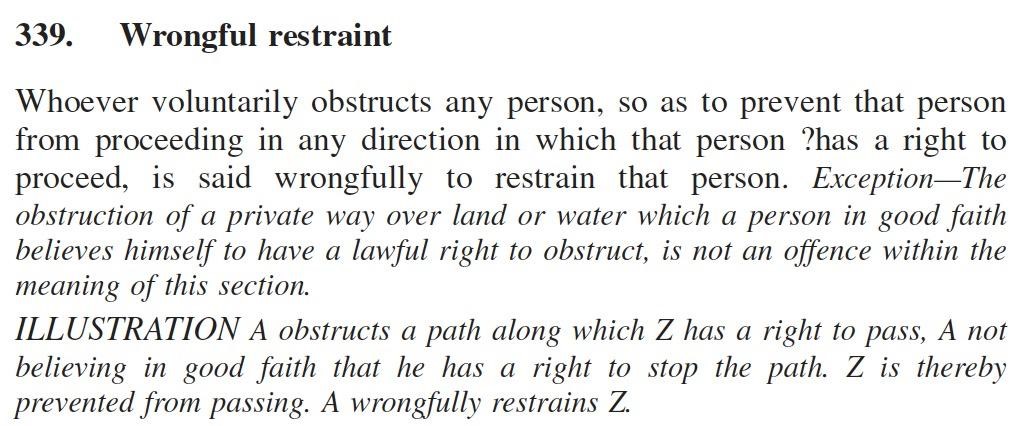
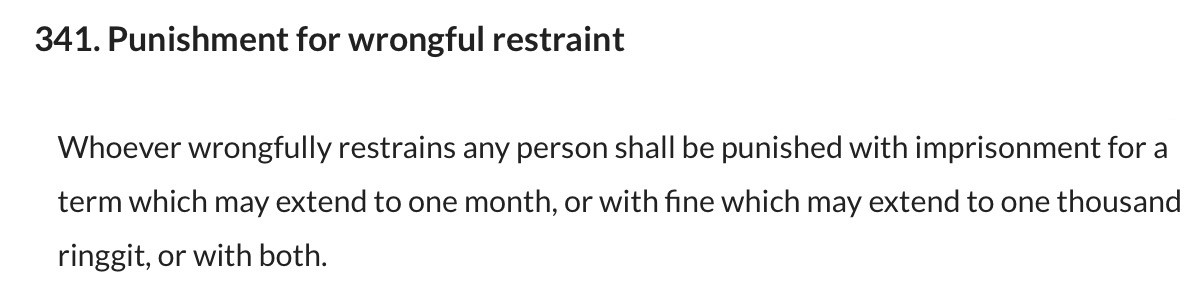
Sections 339 and 341 (Wrongful restraint)
Additionally, Section 339 deals with wrongful restraint, which may apply in situations involving blocked thoroughfares and restricted movement. The punishment for offenders convicted under Section 341 is imprisonment for up to one month, a fine of up to RM1,000, or both.
What happens next?
When the current remand order expires, the police must either produce the suspects in court to face formal charges, apply to the magistrate for a remand extension, or release them on police bail. Ultimately, it is up to the Attorney General’s Chambers (AGC) to determine the most appropriate charges based on existing laws.
In criminal proceedings, the AGC plays a vital role as the principal prosecuting authority. Furthermore, the AGC is tasked with determining whether or not the evidence provided by the investigating officer is sufficient to prove a prima facie case.
As at the time of writing, two suspects have been charged at the Kulai Magistrate’s Court on 27 August under Section 42 of the Road Transport Act 1987. As for the other nine suspects, Kulai district police chief ACP Tan Seng Lee confirmed that they have been released on police bail.
Do note that being released on police bail does not mean the investigation is over; suspects can still be called back and formally charged in court at a later date once the investigation papers are completed. As legal proceedings unfold, this high-profile case serves as a stark reminder that public highways are not racetracks, and reckless disregard for public safety will inevitably meet the full force of the law.
For more insights into the Malaysian legal system such as this, do make sure to follow us on Facebook and Instagram or visit our official website. You can also read our articles on the popular Malaysian news aggregator app Newswav here.